Showing posts sorted by date for query rufus king. Sort by relevance Show all posts

Friday, September 13, 2024

"Show me a happy homosexual and I'll show you a gay corpse": The Retro Homphobia of Francis Nevins' Cornell Woolrich Biography First You Dream, Then You Die (1988)

This piece is largely culled from my 55-page article at Crimereads from a few years ago, but I wanted to highlight here the raging homophobia in this book, given my recently publicized assertion that a certain retrograde comment by Otto Penzler, publisher of Dream, suggests how a homophobic book like Dream won an Edgar in 1989.  (This offended Otto so he apparently bounced me from doing an intro for Mysterious Press on gay crime writer Rufus King.)

Penzler's comment was actually a claim that men supposedly write better than women because men try to write literature, so it wasn't about homosexuality at all. Yet retrograde sexism and retrograde homophobia frequently go hand-in-hand.  Though actually I said it was Nevins' bio that was homophobic, not the publisher of the book.

But what I was trying to get at and maybe not conveying in a one sentence comment, was that there must have been an obtuseness on the part of Otto and other people (like the Edgar Award committee) not to see the dreadful homophobia in the book, assuming they really read it.  Or maybe they simply shared Nevins' attitudes.  I don't know.  I think people just easily bought into the "self-hating homosexual" cliche which is the keystone of Nevins' Woolrich thesis.  This cliche was dutifully trotted out for decades by people writing about Woolrich and it still is even today, so it's been a hardy perennial.

Writer Barry Malzberg has said that Nevins regards homosexuality as a "pathological" condition.  It does appear that way from his writing, because Nevins seems convinced that to be gay (a term he never uses) is to be self-hating.  If you're interested in this subject read below the excerpt from my article.  It still amazes me how the nasty anti-gay attitudes emanating from the book never drew any offended notice, with a few exceptions like Malzberg and Bill Pronzini, until my article appeared.  Malzberg and Pronzini are straight guys and they definitely managed to notice it. Anyway, here's the article excerpt.  Gird your loins and grab your wig for this look at homophobia in the Eighties AIDS era!

Self-hating, tearful Catholic homosexual and supportive friend in the original film version of
The Boys in the Band (1970)

How is the self-loathing homosexuality which Francis Nevins believes to have been the black wellspring of Cornell Woolrich’s unique writing genius reflected in the author’s voluminous crime fiction?  Here are examples from Dream of what Nevins terms "homosexual symbolism" in Woolrich's work:

"I was carrying Death around in my mouth," the reporter tells us near the end [of the story "Death Sits in the Dentist's Chair," where a dentist fills cavities with cyanide], and if one is determined to find subtle traces of Woolrich's homosexuality everywhere in his work, one might as well begin here. (p. 129)

While struggling with Cook over a gun, the hobo is shot in the mouth (here we go again, homosexual symbol seekers!) (p. 141)

....they arrange for a pickpocket accomplice to take a ride on the same train that is bringing Bull to the state pen, sit in the seat behind the mobster and quietly puncture Bull's rear end with a hypodermic full of germs (homosexuality symbol hunters take notice!) (p. 157)

All these instances seem reductive to my mind--not to mention remarkably puerile and in dubious taste. Since Woolrich was a gay man, so the reasoning seems to run, inevitably any time in his tales when poison, bullets or germs enter a man's mouth or buttocks it symbolizes homosexuality. In this juvenile egg hunt for "homosexual symbols" Nevins focuses relentlessly on sex acts.  Is it Woolrich who associated gay sex with death or is it Nevins who has imposed this meaning on Woolrich's texts?  Dream appeared in 1988, at the height of the AIDS epidemic in the United States, something which may have influenced Nevins' take on this matter.  Yet unless he was endowed with second sight, like his seer character in Night Has a Thousand Eyes/"Speak to Me of Death, Woolrich could not have foreseen this calamity.

I have read my share of Woolrich (granted, Nevins has read everything, as Dream makes abundantly clear) and for my part I cannot say that in the author’s work I am strongly struck by intimations of same-sex attraction on his part.  Woolrich often does write well from a woman’s viewpoint, but he writes convincingly from a tough male viewpoint as well.  Seemingly absent from Woolrich’s fiction is the sustained interest in the male body which I have found in the work of gay male vintage crime writers like Hugh Wheeler and Richard Webb (aka Patrick Quentin/Q. Patrick/Jonathan Stagge), Rufus King, Milton Propper and Todd Downing. 

am powerfully struck in Woolrich’s work by an aching depiction of loneliness, despair and doom, yet, Nevins notwithstanding, this is not a state of mind which is specific to gay men. Any person, whatever his or her sexual orientation, might have these feelings and give expression to them in fiction.

Given Nevins’ writing about Woolrich, it is not surprising to see that he authored an 1977 article about Milton Propper, identifying him as another “tragic” homosexual, and that in a 2010 Mystery*File article he condemned Patricia Highsmith along the same lines as Woolrich, whom he passingly denigrates in his harshest terms yet: “If you think Cornell Woolrich was something of a psychopath and a creep, you don’t know the meaning of those words till you’ve encountered Highsmith.  Both, of course, were homosexual.  I gather from [Joan Schenkar’s biography] that Highsmith…was never terribly comfortable with being a lesbian….Woolrich was perhaps the most deeply closeted, self-hating homosexual male author that ever lived.”

If you are sensing an invidious theme here, I would hazard to guess that you are right.  Elsewhere in Dream Nevins refers passingly to “the special agonies of the homosexual whose religious roots are Catholic” (Woolrich’s father had been a nominal Catholic and Woolrich adopted the faith, at least nominally, near the end of his life); and he speculates that Woolrich and Catholic film director Alfred Hitchock, who adapted a Woolrich short story as his renowned flick Rear Window, shared the same pessimistic worldview--that the world was “a hideous and terrifying place”--on account of their “longing for physical relationships which the obesity of the one man and the homosexuality of the other seemed to put forever out of reach.” Evidently both stoutness and queerness constituted crippling hurdles to human happiness in Nevins’ mind.

When gathering such black pearls of wisdom about members of the queer community in my basket of literary boners, I am frequently reminded of the morbid line from the pioneering if at times problematic queer film The Boys in the Band, which premiered in March 1970, just a year-and-a-half after Cornell Woolrich’s death.  “Show me a happy homosexual and I’ll show you a gay corpse,” pronounces one of the film’s characters.  (Yes, this character is a self-loathing, lapsed-Catholic gay man.)  In his writing about Woolrich and other crime writers whom he deems to have been queer, Nevins seems to have drawn this dismal credo deep into his heart.

Should I Go on with All This?

I love writing, in fact it's the only thing that has kept me going the last year.  And DSP is interested in publishing a Wentworth book, so there's that.  But after Otto Penzler's very deliberate slap in the face I'm asking myself, should I go on with any of this anymore?  Doing that Rufus King intro meant so much me.  It just gets hard to keep the will going anymore when you get treated like that.  I'm told Otto felt insulted by my comment, but his statement was sexist and the book he published was homophobic.  If I summon the will I will draw the relevant portions from my Cornell Woolrich article to show you.  

Obviously the political thing would have been to have said nothing, which is why most people say nothing when it comes to Otto or any person in power who might be able to impact their career negatively.  I thought he said a dumb thing, but it probably wasn't worth losing the Rufus King intro to say so.  The thing is this never comes up with other publishers.  They don't do or say things like Otto does.  But I guess I just have should not have posted even a brief comment.  You have to kiss up to the big shots, even when you think they said something stupid.  Success in life is more politics than ability.  But I know what the Nevns book is, even if Otto doesn't.  

Certainly it's not just Otto who doesn't see it.  People who accuse him of sexism and racism are mystified by the homophobia stuff.  And, again, I wasn't calling Otto homophobic, though I notice he still seems to use the term "sexual preference."  I think he just has, as I said, retrograde attitudes and an obtuseness.  But the Woolrich book is riddled with antigay prejudice and what I think is an inaccurate, unsound and hatefully cruel and bullying attitude toward its pathetic yet also valiant subject.  But I've said all this before and now I'm just being punished for it.  A lot of people praised my Woolrich article, but where does it really get you?  Which brings me back to my original question: Should I go on with all this?  Is there any point to it anymore?  I don't know.  

Thursday, September 12, 2024

Otto Penzler's Proscription

I received a message today from one of Otto Penzler's employees, telling me that 

Otto, in the midst of the pile-on last winter, went on Facebook to see what people were saying about him and was surprised to see you jumping in to criticize him and his publishing history....I think he was particularly hurt by your suggestion that he might be homophobic. As such, he has said he’s not interested in working with you going forward….


This all occurred during the dust-up (or "pile-on") over Otto speaking at the Boucheron earlier this year.  Ironically I originally made my initial comment on mystery writer Lee Goldberg's post saying why I wanted to stay out of the whole fuss:

Been reading about the fuss with Otto Penzler at the Bouchercon. Looks like that will leave a lot of bad feelings all round. I guess the Edgars over their history have mostly undervalued the traditional mystery, but Otto has done a lot for it with his publishing ventures. I've gotten a few jobs, good paying ones from MP, which I have to say I appreciate. Honestly, I would do more for them if they asked me. His editor has been very nice to me. My book Murder in the Closet was nominated for an Edgar, the first queer nonfiction study so nominated I think. No Anthony nomination, lol. So, really, I feel I will just stay out of this one.

I thought that actually was pretty measured.  Honestly, the Bouchercon has never done anything for me.  But then I reacted to a quote from Otto that Lee Goldberg included in a blog piece criticizing Otto.  Here's my "homophobia" comment from back in February:

"Men take [writing] more seriously as art.  Men labor over a book to make it literature."  Eek.  I remember this but didn't remember it was that blatant.  It's these sorts of attitudes that help explain how the homophobic First You Dream, Then You Die won an Edgar.  

That's it, that evidently is what led to my proscription by Mysterious Press.  But I stand by what I wrote.  

I did not say Otto was homophobic. I was even told, in the year of our Lord 2024, that Otto has "gay friends." (Yes that old chestnut.) Good for Otto! 

Myself I think he is more criticism-phobic, but I'm in no position to judge him personally on this matter. However, I did suggest that he had been obtuse to the homophobia in the Francis Nevins Cornell Woolrich bio he published.  I think quite obviously plenty of people were over the years.  No one publicly commented about the vile antigay subject matter matter in this book for decades until I did.  I go into detail about the homophobia of the Nevins bio here.  Also myriad other problems with it.  

Otto strikes me as rather sensitive for someone who seems to have something of a history of going out of his way to say insensitive things about others. (There is plenty more that could be quoted.) But his proscription of me illustrates Lee Goldberg's point about his "fellow mystery writers, who are so afraid of speaking out against Otto Penzler...."  (See linked article.)  They appear to have reason to feel that way. Otto must have gone through scores of posts on Lee Goldberg's FB page looking for anything in any way deemable of being criticism of himself.  

The last few years I wrote intros for reprints of Roger Scarlett, Q. Patrick and John Rhode for Mysterious Press.  Otto himself praised my Scarlett intro to me (see below).  After that I corresponded only with his employee, but his employee, someone I always enjoyed working with, praised my work too.  

But now I have been proscribed because of an honest criticism I made of a needlessly offensive and to be frank rather dumb comment Otto made.  You should have read what other people were saying.  At least I acknowledged the good things Otto had done for the genre.  If I criticized his publishing history it was for the one homophobic book.  I'll post more on that book later.  

I have done a huge amount of work on queer mystery writer Rufus King and know even more that I haven't written about concerning him.  No one, but no one, knows this author like I do.  But I wasn't asked to write the intro to the Murder by the Clock reprint, it now appears to me, because I offended the Great Man.  And it illustrates precisely the problem that Lee was writing about.  If I hadn't posted an honest thought on Otto's silly statement and the homophobia in the Woolrich bio I might have gotten to write about Rufus King.  

I said what I honestly thought about a current issue in the mystery world; and if I'm to be punished by the power-that-be for that, that's how it goes I guess.  I am but a poor scholar, not a rich suck-up. 

If, like the Elon Musk of the mystery world, Otto out of wounded vanity thinks it demonstrates his commitment to queer history to kick to the curb the queer guy who has devoted much of his life to these projects so be it.  

It's a challenging struggle doing my work the last year with all its adverse circumstances, but I will keep at it as best I can.  Once Otto wrote me of my work: "You have done a masterful research job on an author (s) that have always seemed somewhat remote and unknown.  Thank you for taking so much time and care with this amazing introduction."  

That was nice.  Moods change though.  

After Otto sent these words I just worked with his employee, but, still, it was nice to be appreciated for a time.  I guess he felt I owed him my silence. Whatever the case with that, I don't now.

Thursday, April 27, 2023

There's a Place: A Fatal Inversion (1987), by Barbara Vine (Mysteries You Have to Read)

There is a place

Where I can go

When I feel low

When I feel blue

And it's my mind....

In my mind there's no sorrow

Don't you know that it's so?

There'll be no sad tomorrow

Don't you know that it's so?  

--There's a Place (1963), The Beatles

He didn't want to remember any of this, he wanted to escape out of it to a blank screen.

--A Fatal Inversion (1987), Barbara Vine

In the third edition of his mystery genre study Bloody Murder crime writer and critic Julian Symons had the highest of praise for Barbara Vine (aka the late Ruth Rendell), or at least her first three novels, that stunning succession of A Dark-Adapted Eye (1986), A Fatal Inversion (1987) and The House of Stairs (1988).  The fourth Vine, Gallowglass (1991), Symons pronounced an example of a writer "very much off form," and he had nothing at all to say about King Solomon's Carpet (1991), the fifth Vine, which would have appeared, presumably, when he was writing Bloody Murder, though, like A Fatal Inversion, it won the Crime Writers Association's Gold Dagger for best crime novel of the year. 

Afterward followed vine's Asta's Book (1993), No Night Is Too Long (1994) and The Brimstone Wedding (1995), the first and last of which I think measure up to her first magnificent three.  I'd have to say that those five Vine titles are about as good as anything ever produced in the crime and mystery genre that I have read.

Julian Symons judged A Fatal Inversion the best of the Barbara Vines, and he may well be right.  I may still prefer the Victorian density of Asta's Book, but Inversion is unquestionably terrific.  The novel details events which follow the discovery of the skeletal remains of a young woman and infant child interred in a pet cemetary in the wooded grounds of Wyvis Hall, a Georgian country mansion in Suffolk.  This setting is classical and the opening sentence is a nod to the Golden Age detective novel: 

"The body lay on a small square of carpet in the middle of the gun-room floor.  Alec Chipstead looked round for something to put over it. He unhooked a raincoat from one of the pegs and, covering the body, reflected too late late that he would never wear that again."  

Even the surname Chipstead recalls thriller writer Sydney Horler's gentleman hero "Bunny" Chipstead.  Would Rendell have been familiar with this forgotten crime fiction series (Sapper sapped, as it were), which produced four books between 1927 and 1940?  Probably it's just a coincidence.  

Anyway, with these opening lines Inversion opens like an vintage Alfred Hitchcock movie, but actually the body referenced in them is not a human corpse but rather the body of a euthanized pet, while Chipstead and his wife are the current dutiful, innocent owners of Wyvis Hall.  When they discover human remains in 1986 while burying their dog in the old pet cemetery, they promptly ring up the police--and the hunt is on to identify the remains and to discover just how they came to rest there.

However, Inversion is not a police procedural and legal authority appears in the novel only briefly, in snatches.  The story is told primarily though three characters, Adam, Rufus and Shiva, who were present at Wyvis Hall a decade earlier, when the bodies came to end up in the pet cemetery.  They know what happened, but it never becomes quite clear to the reader until close to the end of the novel.  

The narrative shifts from the present day in 1986 back a decade to 1976 when Adam, a nineteen-year-old college student, unexpectedly inherited Wyvis Hall.  He, his rather swaggering medical student friend Rufus, and Shiva, a desperately assimilationist Indian, along with two young women, a strange, eccentric character named Zosie and a devotee of Eastern spiritualism named Vivien, end up spending the summer of '76, one of the hottest on British record, residing in a sort of commune at Wyvis Hall, which Adam whimsically has renamed Ecalpemos ("SOMEPLACE" spelled backwards).  There they sell off the silver and other contents of the mansion to support themselves in the fine art of lotus eating.  

After the experiment at Ecalpemos abruptly ended, the commune members made a pact never to contact each other again, but the discovery of the human remains has caused Adam, in particular, to rethink this course of action.  A computer designer now married with a young daughter, Adam likens his experience a decade ago at Ecalpemos to a computer file, shut away.  He doesn't want to recall any of it.  Neither do Rufus, now a gynecologist and secret drinker, and Shiva.  But unhappy memories can't remain locked away, safely quarantined, in the face of an active police investigation--a murder investigation....

A novel of some 120,000 words, by my count, Inversion is so skillfully put together that it could be taught in writing courses purely for plot construction.  But it's also a beautifully designed novel, a meditation on crime and guilt and retributive justice, with memorable renditions of character and setting and an omnipresent sense of tragic irony, which surges like a tsunami in the final pages.  

Critics like Symons adored this novel, quite rightly, and as mentioned it won the Gold Dagger from the UK's Crime Writers Association for best crime novel of the year.  (Remarkably, Rendell won a total of four Gold Daggers and a Silver Dagger for individual crime novels, along with three Edgars from the Mystery Writers of America, two of them for short stories and the third for A Dark-Adapted Eye, the first Barbara Vine.)  It's a novel I could write much more about, but I would hate to spoilt it for those who have not read it, it's that artfully constructed.

Adverse criticism of this novel baffles me, but some people have complained that the characters are "unlikeable."  This complaint always amuses me when it's lodged against a crime novel.  Had the characters been likable, jolly people, none of the events in the book would have happened and we the readers would be the losers thereby.  Vine is actually extremely effective at catching the atmosphere of youth's all too brief summer, when life seems joyously free and clear and full of possibility, rather than circumscribed by a thousand demands, duties and impositions.

Others have complained that the novel is too slow-moving, but that is the Vine way.  Her books are often compared to Victorian sensation novels, and that is a valid comparison, but they also remind me of American author Mary Roberts Rinehart's sprawling crime novels from the Twenties into the Fifties.  Vine, I believe, is a superior crime writer to Rinehart, but there is a similarity in technique.  Rinehart is known for her teasing "Had I But Known" style of mystery writing, where the retrospective narrator offers tantalizing hints of what happened, and Vine does the same sort of thing.  It's not Had I But Known, however, but rather, Had I Done This, or Not Done This....

Vine keeps up interest with these teasing suggestions in the first half of the novel and by the second half, when events finally start getting revealed in a gathering, gloomy tide, you will not want to put down the novel, until you know all.  At least I sure didn't!  There's one surprise and then another in the final pages, this last a stunner that Julian Symons called "the most brilliantly ironic ending of any crime story known to me."  I have my differences with old Jules, as we know, but I am in full agreement with him here.  I saw it just a couple of pages ahead of time and was like, oh, shit, really?!

It's a shame that Ruth Rendell used to speak so slightingly of Agatha Christie, for both authors were brilliant plotters and Christie herself had a wicked sense of irony and the macabre.  

In early Christie stories like "Accident," "Philomel Cottage" and "Witness for the Prosecution," brilliant little shards of malevolence, and her late shocking, grim novel Endless Night, you will more than a glimmer of Ruth Rendell.  If you see Mary Roberts Rinehart in Barbara Vine, there is Christie in Rendell.

A Fatal Inversion was adapted as a three part British television series in 1992 with dishy Jeremy Northam, then on the cusp of movie stardom, Douglas Hodge and Saira Todd, but it's crying out for a feature film version (see pic above right).  It's rather like crime fiction's Brideshead Revisited.

A good review of the novel is here and another here.

My review of  Asta's Book (eleven years ago!) is here.

Wednesday, March 8, 2023

Death of a Publisher: Rupert Heath (1968-2023)

My friend, the publisher Rupert Heath of Dean Street Press, has died.  We had worked together on projects on projects for nearly a decade now.  Some background:

Back in September 2014 I was a bit down in the dumps.  My Passing Tramp blog had been up for nearly three full years, since November 2011, and my book Masters of the Humdrums Mystery, which attempted to get discussions of crime fiction beyond the increasingly barren (and false) division between the Crime Queens in England and the hard-boiled boys in the United States, had been published a year later.  I knew there was so much vintage crime fiction, of all stripes, waiting to be rediscovered.  But it was starting to feel like I had been passed by.  I had my blog and my book, published by a minor scholarly press, but no really large-scale publishing forum, like Sarah Weinman, whose anthology of domestic suspense tales by mid-century women writers, Troubled Daughters, Twisted Wives, had been published the year before, or Martin Edwards, who was writing introductions for the British Library's classic crime reissues.  

And then came the Farjeon Affair.  Literally the first post on my blog, on November 22, 2011, was about Golden Age thriller writer Jefferson Farjeon, as my blog was named in honor of his tramp sleuth of sorts, Ben, and the amusing convention in GA mysteries, desperately grasped by country house weekend guests suspected of having bludgeoned their host in his library, that a passing tramp must have done the foul deed.  I posted again about Farjeon and my favorite Farjeon crime novels just four days later, then, one day after Christmas, in a post entitled "A Late Christmas Number," I posted about Jefferson Farjeon's 1937 Christmas thriller Mystery in White.  Little did I know where this would go!  Had I but known....

I remember googling about Farjeon back in those days and there was virtually nothing about him on the internet, certainly nothing about Mystery in White.  I had been collecting his books for over a decade and was a great fan of his, having even travelled to visit the marvelous home of his famous American actor grandfather, Joe Jefferson, in Louisiana.  Sadly I was not invited to have any role when, three years later in September 2014, a major concern published a new edition Mystery in White.  Not only that, but my key, indeed essential, part in having publicized the book in the first place was never, to my knowledge, acknowledged anywhere.  That the book went on to become in the UK a seasonal bestseller over Christmas made the situation even more bittersweet for me--more bitter than sweet, really.  There's only so much satisfaction you can get from being essentially alone in knowing that you were right.

But it was also in September 2014 that I received a message from a man named Rupert Heath, in the form of a comment left on my blog.  (I don't know now on which post the comment appeared.)  I emailed him and this was his reply:

Rupert Heath

From: Rupert Heath

Sent: Wednesday, September 17, 2014 3:17 PM
To: curt evans
Subject: Re: Golden Age Reprints

Thanks for your swift reply Curt.

I was just reading your superb essay on Rupert Croft-Cooke 'The Man Who Was Leo Bruce', which was what prompted me to contact you. As it happens I've just been doing some detective work myself, making contact with RCC's estate (in the form of his secretary and companion Joseph, who is still alive - 90 - and living in India). 

As you know the Leo Bruces have been kept in print by Academy Chicago, who were recently bought by Chicago Review Press. Believe it or not, Academy had lost contact details for the estate years ago and had a rather large check for royalties waiting for him. So I found Joseph for them, and in return I am hoping they will allow me to publish ebooks of the Leo Bruce novels, at least outside North America. I consider him to be in the executive class of the golden age mystery writers and ridiculously underrated today.

I'd be really interested to know who you might recommend we track down for our list, or which estates you might have had communication with. One problem we have is that estates controlled by big agencies (which is not a few of them) are often inaccessible - the big agencies tend to have their own agenda regarding the licensing of their backlist (often partnering with big publishers like Random House) so it's hard to obtain rights on a case by case basis.

Other than Rufus King, I was intrigued by the post-golden age novelist Sylvia Angus who seems to be equally forgotten. I've only read DEAD TO RITES (I believe there are only 3 novels by her) but found it very much in the spirit of Agatha Christie in various ways. She's not one of the greats, but I think her novels would find a readership today.

Best,

Rupert

On Wed, Sep 17, 2014 at 8:57 PM, curt evans wrote:

Dear Rupert Heath,

I am the blogger The Passing Tramp and am responding to the message you left me about reprinting Golden Age works. Let me know how I can help. In some cases I know literary agents and heirs and I certainly know books!

Best,

Curt

It was the beginning of a beautiful working relationship--and a friendship.  It meant so much at that time to have someone to work with, someone who was really at the top of his game and respected me too.  I didn't have any doubt about my knowledge or my writing ability (I'm not modest in that respect), but I just didn't have the connections others had and I was afraid I was going to be doomed to comparative obscurity.  Rupert really helped save me from that.  Since then I have been able to work with other presses, writing introductions (besides Coachwhip, who was my first): Stark House and Moonstone and even HarperCollins for one gig and Mysterious Press for a couple.  And I got a column with Crimereads, wrote for the last issue of Mystery Scene, edited an Edgar-nominated book, Murder in the Closet, and there's even news about a good publisher that wants to publish a new book by me.

But I don't know where it would have gone without Rupert.  All those reprinting projects we had: all the ER Punshons, all the Christopher Bushes, Ianthe Jerrold, Robin Forsythe, that Victorian miss Annie Haynes who proved so unexpectedly popular, Peter Drax, Patricia Wentworth, Harriet Rutland, Molly Thynne, Moray Dalton, Anne Morice, Alice Campbell, Bristow and Manning and their Invisible Host.  And not to hog everything, The Puzzle Doctor's pet Brian Flynn project has been very popular!

It meant a lot knowing how much Rupert respected my work.  This last December and January I was under a great deal of stress as my 92 year old father was in the hospital four times and ambulances were called out to the house three times.  I won't go into it all, but you will have noticed how my blog posting really dipped then.  During that time I managed to get a set of intros written for a new set of DSP Moray Dalton resissues and an intro to the Hake Talbot novels with a good deal of new information on the author.  On the Dalton intros Rupert had this to say:

The intros so far are uniformly excellent, Curt! I think they may be among the very best you've written for us. And they all give fascinating colour and background to the context of MD's writing, the when and the where.

Working on those new intros/afterwords I really appreciated them more and more - you're a fantastic writer!

On the Hake Talbot:

I think this is magnificent!

I was in communication a lot with Rupert through December into January, when I learned of the sudden health problems of his wife Amanda.  I last communicated with Rupert on Jan. 20 when he let me know things were rapidly declining.  Amanda died five days later and I never heard from him again.  I wrote him about ten days ago, but never heard back.  Yesterday, coming home from a doctor's visit with my Dad I learned that Rupert had died from a massive heart attack.  He was only 54.  He leaves two children.

What do you say to all this?  I just don't know.  I do know working with Rupert was a real lifeline for me, one of the most rewarding things in my life.  I feel we were able to take a place of significance in vintage mystery publishing that I hope will last.  At the moment I don't know the status of the Moray Dalton reissues.  They were all ready to go, I think, and I had been paid for the intros.  About the Hake Talbots, or anything else, I don't know (hadn't been paid for that one).  For now please think of Rupert and his family.  

In one of his last emails to me, he sent me a link to a George Harrison song titled "Deep Blue":

My friend David recently sent me a rare George Harrison song, which I hadn't heard before, but now love. You probably know it.

I hadn't heard it before.  I responded:

Liked the Harrison song, made me want to get that edition of the album.  About his mother dying from cancer yet the song sounds not gloomy at all.

He also commented, drolly it seemed at the time, concerning other family health problems (He didn't even know Amanda had cancer yet, but he referred to her having some sort of infection): 

I am presently expecting to drop dead any second.

I was getting so overwhelmed with my Dad's problems and suffering from an extremely painful herniated disc left over from Christmas.  When Rupert emailed me ten days later to let me know Amanda had inoperable cancer, my Dad was on a ventilator in ICU, after reacting poorly to anaesthesia.  Dad made it out, but Amanda died ten days later.  I look back and I wish I had said more to Rupert at the time.  I have an idea what stress can do the heart; my blood pressure has gone up ten points since last year.  I thought I would be working another two decades with Rupert, my health permitting.  I never imagined anything would happen to him.  We are about the same age, but he just looked so healthy.  

From an English garden

I did tell him how much I appreciated the flowers he sent after my mother's death.  I hope that he read it:

I had to take care of my mother when her breast cancer spread again three years ago.  I remember those flowers you sent, that was actually the only time I ever cried, if you can believe it, I thought how much Mom would have liked those lilies. Really, it was one of the nicest things someone ever did for me. 

Rupert was a good publisher and editor and a good friend.  He was kind and generous and did things he did not have to do.  He meant a lot in my life.  I will miss him terribly.

Tuesday, July 5, 2022

The Mystery of Mother Love: Cornell Woolrich, Milton Propper, Todd Downing, Hugh Wheeler, Richard Webb and Rufus King

"[Woolrich] had an unnatural relationship with his mother....the true picture of a homosexual's relationship with his mother....A combination of dependence, adoration, hatred.  All the things you'd expect."--Mystery editor Lee Wright in a 1979 interview with author Francis Nevins

"He is a good, a nice young man but badly controlled by his mother.  You have the expression--a mama's boy?"--Miss Fernandez in "Let Her Kill Herself" (1956), by mystery writer Rufus King

The consensus on gay men--whose "abnormality" in their eyes was a condition that had to be explained and pathologized--used to be that they were unable to develop "normal" relationships with women due to an imbalance in their own parents' relationships, the mothers being "strong" and the fathers "weak" or "distant" and the mothers dominating their sons to an unhealthy degree.  
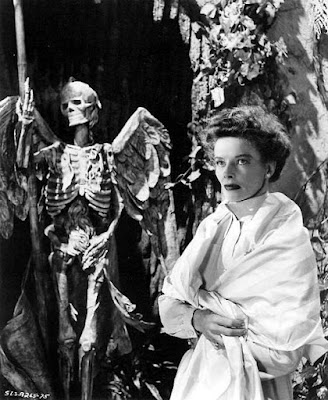
Angel of Death
Katherine Hepburn in
Suddenly Last Summer (1959)

Gay men were "mama's boys," in other words, who, if not actual "sissies" and "inverts" altogether more effeminate than masculine, were so under the ball-crushing weight of their mother's thumbs that for them relationships with other women become impossible.  In this context I always think of Katherine Hepburn as genteel iron lady Mrs. Venable in Suddenly Last Summer, the 1959 film adaptation of Tennessee Williams' 1958 one-act play, and her dead gay son, never actually seen in the play or film, Sebastian.  That's a codependent relationship which leads to some dire results indeed!  On stage there have been a long line of distinguished Mrs. Venables, including Patricia Neal, Maggie Smith, Elizabeth Ashley and the recently deceased Diana Rigg.  

Of course straight men can be mama's boys just like gay men--hence the trope of the wife having to deal with her meddlesome mother-in-law.  Back in the Fifties Hugh Wheeler wrote a superb short story, adapted as an episode of Alfred Hitchcock Presents starring William Shatner, about this phenomenon, called "Mother, May I Go Out to Swim?"  However, it is true that if you look at certain famous gay, or reputedly gay, male vintage mystery writers, you do often find that the men had very close--and sometimes personally disabling--relationships with their mothers.

Probably the most famous "queer" male American mystery writer was Cornell Woolrich (1903-1968), except for the needling fact that we don't really know whether he actually was gay.  A queer, very queer fellow, yes indeed, but, gay?  Well, we just don't know, as I pointed out in my Crimereads article on him from last January.  

Cornell Woolrich in 1925
He was in his early twenties
and writing his first novel

Cornell's relationship with his mother seems almost like the textbook case of a smothering mama (at least later in life; when he was a child she seems to have been rather neglectful),  Yet frustratingly we almost never hear from his mother, Claire, at first hand, and get her side of the story.  She likely would have responded that her boy was a mess and needed a mother's steady hand.  And it's true that Cornell was one messed up dude, physically as well as psychically.  

If Cornell was gay in a repressive era, that was the least of his problems, in my view.  Right now I lean to his having been more likely asexual.  Cornell actually was married, briefly, but his wife annulled the union on account of his having been unable to consummate it.  It seems unlikely that he had any other serious intimate relationships, although a couple of hearsay accounts claim that he cruised men.

"Dependence, adoration, hatred," Lee Thayer called it, when discussing Cornell Woolrich's attitude to Claire with Francis Nevins.  "All the thing's you'd expect" with "a homosexual's relationship with his mother."  How does this Thayer's sweeping generalization stand up with some other gay male American/Anglo-American vintage mystery writers?
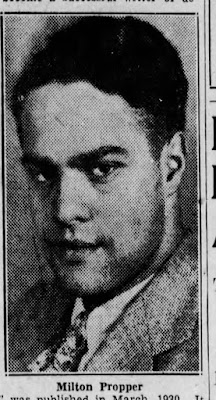
Milton Propper 
in his early twenties
after he had published
his first novel

Mystery writer Milton Propper (1906-1962), a brilliant young Jew from Philadelphia--people joked that he was still wearing short pants when he enrolled in college at the age of 16--was said to have had a very close relationship with his beautiful and charming mother Helen, to whom he dedicated his first detective novel.  He also dedicated a detective novel to his smart sister Madelyn, but, even though he published 14 of them between 1929 and 1943, he never got around to dedicating one either to his father Jake or his brother Walter, neither of whom, according to a cousin, was that bright a bulb in the family chandelier.  

Milton's mother died in 1944 and, coincidentally or not, Milton's life went decidedly downhill after that and he committed suicide in 1962, having never published another book.  While he was known to have been gay and to have picked up men, whether he had any stable intimate same-sex relationships is unknown.  

Todd Downing (1902-1974), who authored nine detective novels between 1933 and 1941, lived most of his life in the town of Atoka, Oklahoma and was one-eighth Choctaw (through his father) and half-Yankee (through his mother).  Although his father was an important man in local politics and a tribal leader, the Downing household was decidedly gynocentric, dominated by his outspoken, long-lived maternal northern-born grandmother, Awilda, and his mother Maud.  

His elder brother Gordon having died as an infant, Todd's only sibling was his lesbian sister Ruth, who graduated from Columbia University with a degree in social work and long lived with a female companion.  The family was, quite frankly, better educated and more cultured than most of the town of Atoka, and they always stood somewhat apart from it, leading to a certain insularity on their part.

Todd Downing in his early twenties 
when he was a college instructor

I've never actually received any confirmation that Todd was gay, but his writing and his personal collection of books are hugely suggestive in this context.  Todd never married or, indeed, had any intimate physical relationships of which we know. During the Forties, after he gave up writing and college teaching as a profession, Todd, now himself in his forties, moved from his parents' home in Atoka to Philadelphia and worked with an advertising firm.  In the early Fifties he taught at some private schools before moving back to Atoka after the death of his father to live, yes, with his mother until her death a decade later.  He lived alone at the family house and taught at Atoka High School until his own death, another decade after his mother's passing.

Now we come to some gay writers who had--like Cornell Woolrich, who was active as a crime writer from 1934 to 1968 (although his greatest years were in the Thirties and Forties)--far greater longevity within the mystery genre: Anglo-American partners Richard Wilson Webb and Hugh Callingham Wheeler, who wrote as Q. Patrick, Patrick Quentin and Jonathan Stagge.

Hugh Wheeler
in his early twenties, when
he began writing crime fiction
with his partner Richard Webb

Handsome Hugh Wheeler (1912-1987)--who floated through life, seemingly, on a cloud of serene self-confidence--is the only one of these men who seems not to have been arguably mother-dominated in any sense.  His closest family relationship was with his only sibling Jack, his elder brother.  

He and Richard Wilson Webb (1901-1966) are also the only men among this group, apparently, who ever were able to maintain long-term sexual relationships.  They themselves lived together  as partners between 1933 and 1951, although the relationship became "open," at least on Hugh's part, when they were parted during World War Two.  Hugh lived with another man, whom he met during the war, from 1951 (after Rickie moved out) until his death in 1987, although he had additional, more transitory relationships as well.  

Richard Wilson Webb's health severely declined after the war, but he too seems to have lived with another man in France, a Frenchman named Jean, in the fifteen years that lay between his breakup with Hugh and his own death in 1966.  Webb seems to have been much closer to his mother (he compared Hugh's face to hers, a great compliment in his eyes) and even to have disliked his father.  There's a highly suggestive short story by him in this context.  

Richard Wilson Webb
in his twenties around the time 
of the publication of his first
detective novel

Rickie also grew up in the youngest in his family, with a bunch of sisters and one significantly elder brother.  I tried to communicate a few years ago with the son of this brother, Rickie's only nephew as far as I know, a retired law professor who is now in his nineties; but he pointedly refused, via email, to talk with me.

Now we come to Rufus King (1893-1966), the elder of the lot and the only one old enough to fight in the Great War, which he did, most heroically.  Courtesy of a recent interview which I conducted, I now have more information on the author concerning this subject.  

I've written a bit now about Rufus' interesting family background, but I will recap here briefly.  He was the only child of a New York doctor, Thomas Armstrong King, and Amelia Sarony Lambert, a great-niece of once-famed celebrity photographer Napoleon Sarony.  

The family maintained two residences, one the Lambert family home at 141 Lexington Avenue in Kip's Bay, described in a 2017 New York Times article as the "least fashionable neighborhood of Manhattan," and the other an 1818 Georgian home at the small upstate New York town of Rouses Point, two miles from the Canadian border on Lake Champlain.  It's a lovely home but no one was exactly beating down the doors to live in Rouses Point.

Rufus' father's family was New England Yankee of undistinguished lineage as far as I can tell, (Thomas' father, Washington King, was a dry goods merchant of Mooers, another small upstate New York town), while Amelia, through her father's French Canadian Catholic relations, could regard her own family as "artistic."  Among her siblings she had a younger brother and sister, Thomas and Nora, who were actors and artists, although they enjoyed no great success and, indeed, lived with (and off?) Amelia and Thomas, along with their mother, Maggie, for much of their lives.  

Did Amelia regard herself as culturally superior to her husband, like playwright Tennessee Williams' mother Edwina Dakin, and pulp writer Robert E. Howard's mother Hester Ervin?  This sort of thing crops up frequently with the parents of artistically creative men, who often were closer to and fostered in their artistic inclinations by their mothers.  (On the other hand, author Georges Simenon hated his mother.)
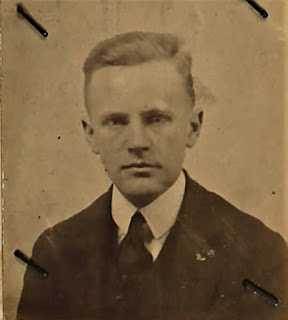
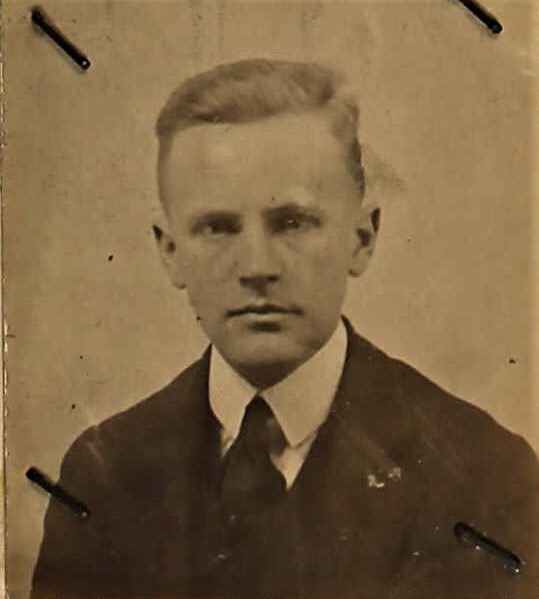
Rufus King age 27
when he was working as a 
steamship wireless operator

Thomas King seems to have tried to keep Rufus' nose to a practical grindstone.  After Rufus graduated from Yale in 1914 and declined to enroll in law school at Columbia University, his father put him to work in a silk mill in Paterson, New Jersey.  Two years later, "Rufe," looking for a more adventurous life, heroically rebelled by joining the New York National Guard and serving in the Mexican expedition against Pancho Villa and later the First World War, where he was awarded the Silver Star Medal.  He then became a wireless operator on a steamship, returning to the States in 1920, at the age of 27, only after selling a pulp adventure story to Argosy and determining to make his living from fiction writing.

But where did he live?  Why, with his parents!  We talk about adult children living in their parents' basements today, but of course this was a common enough phenomenon back then too (though you can be sure Rufe was not living in any basement).  

All through the Twenties, as he established himself as a successful pulps writer and novelist (two of his works had been adapted as films by 1925), Rufus lived with his parents in Manhattan and Rouses Point, often wintering with his mother in Florida.  I get the impression much time was spent apart from his busy father, one of whose patients was playwright Eugene O'Neill, but in any event, Thomas King contracted pneumonia from a patient in 1927 and the next year at the age of 62 he died a lingering death from the wasting disease.  He had taken more than ten months to expire.

Amelia herself was 60 at the time and she proceeded to live as before, only she now had control over much of her dead husband's money.  A trust fund had been set up for Rufus by the terms of his father will, giving him no control over the capital, though by this time Rufus was 35 years old.  It seems Rufe was considered too improvident to be trusted with money.

Rufus remained living with his mother at Rouses Point, wintering with her in Florida, even though in 1929 he published a very successful mystery novel, Murder by the Clock, which was successfully filmed in 1931.  He was a very popular mystery writer throughout the Thirties and Forties, with his books reprinted in paperback, and he wrote three Broadway plays, including the book for the mystery-musical hybrid Murder at the Vanities (1933), a big stage hit, adapted successfully as a film in 1934.  
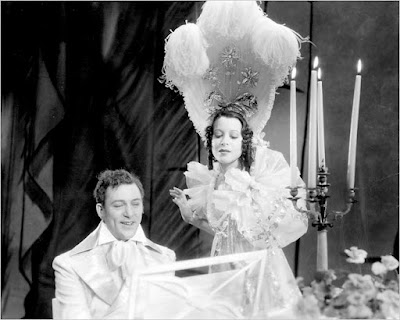
Carl Brisson and Kitty Carlisle in 
Murder at the Vanities (1934)
Liberace would have added some glitter.

Like Cornell Woolrich, Rufus King must have been making a great deal of money by this time (even with his inheritance from his father tied up in a trust), although evidently money went through his hands like water.  (He once bought a Rolls Royce in cash.)  

Like Cornell Woolrich, once again, Rufus chose, despite his success, to continue cohabiting with his mother.  He apparently never left her side, except for short periods. (He seems to have made a trip to England by himself in 1931 and they were necessarily separate, for example, when his plays were going through rehearsal.)  

People at the time seemed bemused by Rufus King maintaining his distant fastness in Rouses Point, seemingly about as far removed from New York City civilization as Manhattan, Kansas.  The situation  is reminiscent of Todd Downing, whom local newspapers dubbed "the hermit of Atoka."

"Anything for a quiet life," quizzically observed one New York newspaper article of Rufus' sticking it out at Rouses Point.  To a newspaper interviewer in 1932 Rufus himself put it this way, typically drolly, of life at his "sheltered nook":

You've got to lead a quiet life to write about crime, says King, whose books are beginning to rival in popularity those by the late Edgar Wallace.  And what he means by quiet is lake, wood, roadhouses, bootleggers, boarder jams, army posts, French-Canadian taverns, baseball, customs jambles, in the summer--hunting, sadness, chills, log fires and peace, in the fall--snow, ice, Belasco winds, drifts, snowshoeing, skiing, mulled ale and a passion for spring, in the winter--with a substrata of auction and contract, dogs, scandal, gossip--and that's all.

The granddaughter and daughter of Rufe's successive trustees suggested that Rufus was a charming profligate, beloved by women and children, who needed looking after by his male trustees and his Mama:

The author was a family friend.  His father, Dr., King, was a friend and client of my grandfather, who was a lawyer and Rufus' trustee.  (Dr. King somehow knew that Rufus needed his money looked after.)  My father, also a lawyer, inherited this position.  As a child and young person, I adored Rufus; he was an enchanting person.  We had an obligatory weekend chez Rufus every summer, at his home in Rouses Point, NY.  My father found Rufus alarming, but my mother and Rufus laughed gaily and understood each other.  When asked, he presented her with a copy of his [mystery novel] Museum Piece No. 13, inscribed.  Knowing him, my mother said, "Now Rufus, please writing something I can show to my dignified friends."  Upon which he wrote, "For Jane, to show to her dignified friends.  With love to her. and nuts to them."

....Rufus said that his "reader" was his widowed mother.  She was given the manuscript halfway through.  If she could guess who the murderer was, he rewrote.

Cornell Woolrich alienated people, Rufus King captivated them.  Woolrich was perpetually unhappy with his lot in life, Rufus King was--well, what, exactly?  The above account paints a picture of a man loving life and even getting along swimmingly with his widowed mother and his trustee's wife and daughter, even if the staid trustee himself found Rufus' gay antics "alarming."  For three years Rufus to much acclaim performed women's parts in drag in productions of the Yale Dramatic Society, while with much valor he commanded field artillery during the Great War.  For several years afterward he was the wireless officer on a steamship and traveled around Latin America.  It's impossible to imagine the neurasthenic Cornell Woolrich, who fearfully lived out his life in a series of New York hotel rooms, doing such things.

Yet there was, it seems, one crippling fear which possessed Rufus: fear of his mother.  

I'll look more at this next blog post, when I go over what happened to Rufus during the last 15 years of his life (1951-1966), after his mother died in 1950 and he left Rouses Point for good the next year.  How much did Rufus' last, motherless years resemble or differ from those of Cornell Woolrich--ten years (1958 to 1968) which were for Woolrich, sad to day, even more dismal than all of his previous ones.
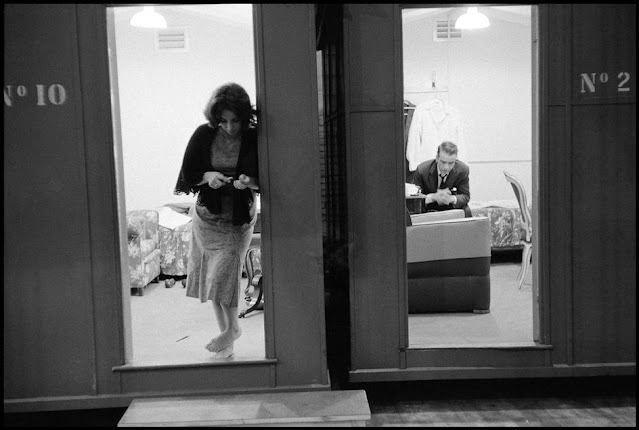
Just Friends
Elizabeth Taylor and Montgomery Clift in their rooms during the shooting of 
Suddenly Last Summer (1959)

Wednesday, June 29, 2022

The Adventures of Rufus King: The Making of a Major Vintage Mystery Writer

What to do after college is a perennial question for graduates.  Some gets jobs.  Some go to grad school.  Some take a gap year.  

The "Rainbow Division" 
had its inception in the New York
National Guard, but took units
from across the country, 
"like a rainbow" as Major
Douglas MacArthur put it

Future mystery writer Rufus Franklin King, the only child of successful New York doctor Thomas Armstrong King, was supposed to enroll in law school in the fall at Columbia University when he graduated from Yale in 1914 at the age of 21, but things didn't work out that way.  

When Rufus balked at the prospect of "taking silk," speaking loosely, his father "put him to work in a silk mill" (Rufus' words) at Paterson, New Jersey.  (Dad had his hand on the purse string, don't you know.)  This was just a year after the famous general strike at Paterson in 1913, which was a great progressive celebrity cause of its day.

Rufus stuck it out in the grim wilds of New Jersey, 20 miles from his native Manhattan, for just two years, until 1916, when he joined Squadron A Calvary, a unit of the New York State National Guard composed of "many of the foremost young society men of New York," to serve adventurously in the Mexican expedition against the forces of Mexican revolutionary leader Francisco "Pancho" Villa.  

When, with American entry into the Great War in 1917, Squadron A was reorganized the following year as the 105th Field Artillery, King served overseas in Europe in Battery A from June 5, 1918 through March 13, 1919. 

During this time King performed with great valor and was awarded the Silver Star Medal for his heroism during the Meuse-Argonne Offensive, which was conducted over seven weeks in the fall, culminating in the German armistice on November 11, 1918, after over 26,000 Americans had been killed, along with a like number of Germans.  It remains the deadliest battle in US Army history.

battery of the 105th Field Artillery, France
At the large wood known as the Bois de Sachet, Lieutenant King stepped into the breach with his pair of guns after the wounding of his Captain, "displaying great initiative, energy and unusual military ability."  As Rufus later put it in a publicity blurb, he "was cited for holding the front line in the Bois de Sachet with two French .75s."  

After leaving the US Army in 1919, Rufus bloody well wasn't going back to a prosaic life in Paterson, New Jersey.  

Instead of going back to the silk mills, he became the senior wireless operator aboard the steamship Annetta, which was leased to a fruit company, and spent much of his time in Latin American ports, enjoying many adventures.  

Off Pernambuco, Brazil he "salvaged a ship...and hauled it into port" and "he beachcombed along the waterfront of Buenos Aires."  An attractive and charismatic blond American still in his twenties, "Rufe" doubtlessly collected some fetching objects on his waterfront wanderings.

Canon de 75 modele 1897

It was in Panama that Rufus completed a manly adventure story and sent it on to the pulp magazine Argosy.  On his next return to Panama, so the story goes, he found an acceptance letter from the magazine along with a check; and he thereupon resolved to return to the US and make his living from fiction writing.  (Of course being the only child of a wealthy doctor didn't hurt, but the publicity material never mentioned that little detail.)  

Presumably this career-altering tale was the serial "Dirty Weather," which appeared in Argosy in three parts in October 1922.  Still, on returning to the US he worked for a time in the maritime division of the New York City police (boats again), so he hadn't exactly bet the farm, so to speak, on writing.  

I have a feeling boats are involved again!

"Dirty Weather" was followed in Argosy by the serials "Dirty Work" in May 1924, "Tuned Out" in September 1924 and "North Star" in February 1925.  "Tuned Out" was later repackaged as a mystery (which is isn't) and published as The Fatal Kiss Mystery in 1928, as a follow-up to Rufus' first mystery novel, a very Roaring twenties affair entitled Murder De Luxe (1927).

"North Star," a "dog tale" about a heroic German shepherd who rescues his dumb master from disaster, became Rufus' first published novel in 1925.  It was a substantial success and was adapted as a fifty minute silent film, released on Christmas Day of the same year and starring Strongheart, a doggy rival to Rin Tin Tin, and, in a sixth-billed part, a 24-year-old Clark Gable.  

Rufus is said to have based his canine hero on his own German shepherd police dog.  I wish I had a picture of them!

The next year Rufus published another dog novel, Whelps of the Wind (this time the dog democratically is a "mongrel," as they used to say, i.e., a pooch made of mixed breeds).  This book was well-received too, although no film was made from it.  Perhaps Strongheart held out for more dough--dog biscuit dough, that is.


The first actual film based on a Rufus King story was an espionage film set in the Panama Canal, called The Silent Command.  The film, which starred none other than Hungarian actor Bela Lugosi in his first American film role (the lead villain, natch), opened in August 1923 and was quite well-received.  Was this one of the early Argosy serials originally?

It was not until 1927 Rufus published his first actual crime novel, the aforementioned Murder De Luxe, having torn up his third dog novel after reading Gladys Bronwyn Stern's novel The Dark Gentleman, which the deemed the last word in dog tales.  He followed Murder De Luxe in 1928 with The Fatal Kiss Mystery, which was really a Wellsian light sci-fi story masquerading as crime fiction.

Bela Lugosi as a wicked wireless operator out to blow up the Panama Canal in
Rufus King's The Silent Command (1923)

Finally in 1929, a year after the death of his father from pneumonia at the age of 62, Rufus, whom the will of his father had hedged in with a trust fund and trustee, published his first Lieutenant Valcour detective novel, Murder by the Clock.  It was a huge success and set his career firmly on the course of mystery fiction.  The leap in sophistication from his previous books is indeed remarkable.  

What critics liked so much about Murder by the Clock was not its puzzle plot per se but the characters with which Rufus peopled it.  Unbeknownst to critics, they had discovered a crime novel, a serious story about people impacted by a crime.  In my view Murder by the Clock stands as one of the great American mystery debuts of that year, alongside Dashiell Hammett's Red Harvest and Ellery Queen's The Roman Hat Mystery, and is something of a compromise between them.  

It's too bad Rufus King was one of the mystery writers whom Julian Symons reread, when writing the first edition of Bloody Murder in the early Seventies, and damningly deemed to be not "anything like as good as I remembered" from adolescent days. In truth it's exactly the sort of thing that Symons should have liked: a dark story of warped personalities, morbid psychology and aggressively presented sexuality, with the rapid narrative pace of Red Harvest, one of Symons' favorite crime novels (and rightly so).

This was the first Rufus King novel which I ever read, about twenty years ago, and I'll admit at the time I didn't like it, being in my full "Humdrum" phase in those days.  It seemed too thinly plotted to me.  

On recently reading the novel, however, I thought it simply superb.  John Norris at Pretty Sinister Blog reviewed it over a decade ago, back in January 2012, which seems like practically ancient history now.  My first Rufus King rave, of Rufe's third Valcour crime novel Murder by Latitudecame later that year, and Mike Grost at his mystery fiction website also posted a good deal about Rufus King around that time.  I think all that led to Rufus getting republished in 2014, although unfortunately I was never involved with that particular publisher.

I quote the conclusion of John's review below, because he really nails it to the masthead, as it were:

Murder by the Clock is unlike any other American mystery I have read from this era.  Ture, there is detection and the policeman hero is doggedly determined to being in the villain of the piece, but the emphasis here seems to be less on the mechanics of the criminal investigation and more on the after effects of the crime as it alters the lives of the Endicott household.  In this respect King's novel is far more modern than one would expect from his era.  He may have been one of the earliest writers to explore the real drama inherent in crime and its aftermath rather than exploiting a fictional murder as a mere puzzle entertainment.  

 a natty Rude King in the 1930s
bronzed and burnished by many an idle
summer spent in Florida and Bermuda

There's a great deal of truth here, a'though I always recoil from the term "mere puzzle/s."  Indeed, that's one of the chapter titles, ironically used, in my books Masters of the Humdrum Mystery, a defense of the classic, puzzle-oriented mystery, which was published in 2012 as well.  

I love me a murder puzzle with meticulously detailed detection and I truly believe a good puzzle is never "mere," but there's something truly thrilling with Murder by the Clock in seeing such a mature embodiment of the crime novel way back in 1929, one that doesn't have to resort to thuggish brutal violence like Red Harvest (good as it is) to score its points about human nature.  Rufus King is writing about a much more sophisticated New York milieu than Hammett's Wild West extravaganza, but his perception of the horrid darkness often found at the core of the human heart is just as acute as Hammett's.

Rufus King reminds me a great deal of another handsome and sophisticated gay vintage mystery writer, one who will be very familiar to readers of this blog: Hugh Callingham Wheeler (1912-1987), who over three decades wrote crime fiction, both with his partner Richard Wilson Webb and, after the two men broke up, solo.  

Although he was a full generation removed from Rufus, Hugh Wheeler and Rufe are rather similar writers.  Both men were precocious college students possessed of copious amounts of personal charisma, both were extensive travelers and lovers of the life aquatic, and both took writing seriously as an art form and were desirous in their mystery fiction of doing something more than mystifying their readers.  Both men had multiple films adapted from their works too.

Hugh Wheeler ultimately abandoned crime writing for theater and film writing, publishing his last crime novel in 1965, although Seventies works like the stage musical Sweeney Todd and the black comedy film Something for Everyone certainly have criminality in them.  Rufus King first abandoned his series sleuth Lieutenant Valcour after eleven books in 1939 and then left long form crime writing altogether in 1951, although he continued publishing short crime stories, primarily in Ellery Queen's Mystery Magazine, throughout the Fifties and Sixties, up to his death in 1966.  But they both left sizeable and important mid-century crime fiction legacies and there's no doubt in my mind that they were two of the genre's most significant and distinctive authors.