Showing posts sorted by relevance for query Q. Patrick. Sort by date Show all posts

Tuesday, July 24, 2018

Split Personality: Q. Patrick and Patrick Quentin, aka Richard Webb and Hugh Wheeler

Q. Patrick (Richard Webb)
Q. Patrick, author of The Grindle Nightmare, Death and the Maiden and other classic detective novels, was Richard "Rickie" Wilson Webb's firstborn child, originally conceived with his Philadelphia friend Martha "Patsy" Mott Kelley-- though a few years later Rickie's partner Hugh Wheeler became Q. Patrick's stepfather, if you will. Rickie always seems to have identified with Q. Patrick and during the Second World War, when Rickie was stationed with the Army Signal Corps in New Guinea, he wrote Hugh, who was back in the US at Fort Dix, that they needed seriously to revive Q. Patrick when he returned home. (There had been no new Q. Patrick novel since 1941.)  Only one more Q. Patrick novel would appear, however, in 1951.  Hugh had a stronger interest (see below).

Rickie posed for a publicity photo taken of "Q. Patrick" at the inception of Q. Patrick's career in 1931, when Rickie was about 30 years old and still rather handsome, before the onset of various health problems prematurely aged him.

Hugh Wheeler
Two years later, Rickie while visiting London met Hugh, a dashing 21-year-old recent graduate, with honors, of University College.  Hugh moved back with Rickie to Philadelphia, where they wrote together for nearly two decades not only as Q. Patrick but the newly created Jonathan Stagge and Patrick Quentin, the latter pseudonym becoming by far their best known pen name.

If Rickie Webb was the public face of Q. Patrick, it seems that Hugh Wheeler was the public face of Patrick Quentin.  (I don't know who, if anyone, "faced" for Jonathan Stagge.)  Published with a 1938 Patrick Quentin short story, a lightweight murderless romance called "Tough or Tender," was a photo of Hugh Wheeler, aka Patrick Quentin, then the author of a single mystery novel, A Puzzle for Fools (1936). 

Readers who might be curious about the new author were informed that Patrick Quentin was "unmarried" (though he was definitely taken), of "equable disposition" and "fond of fishing."  This sparse though welcome detail, coupled with the photo, should have been enough to net Patrick Quentin a few fan letters, if not some proposals!

Friday, November 20, 2015

The Q. Patrick/Patrick Quentin/Jonathan Stagge Consortium and The Puzzles of Peter Duluth

One of the most important American crime writers, oddly out of print today in the primarily English-speaking world (though this will change when Crippen & Landru's collection of short crime fiction, The Puzzles of Peter Duluth, is published), is Patrick Quentin, who also wrote as Q. Patrick and Jonathan Stagge.  I've reviewed several works by this consortium, if you will, and they generally are extremely good, in my opinion, but the the authorship question has remained somewhat murky over the years, so let me try to elucidate a bit.

It all started in 1931, when the native English Philadelphia pharmaceutical executive Richard Wilson Webb (1901-1966), published a mystery novel, Cottage Sinister, in collaboration with Martha Mott Kelley (1906-1998), a recent Radcliffe graduate descended from the the Quaker abolitionist and feminist Lucretia Mott and niece of the progressive social reformer Florence Kelley, under the name "Q. Patrick" (the last name derived from "Pat" for Martha Kelley's nickname Patsy and "Rick" for Richard Webb's nickname Rickie and the "Q" in honor of what they pair considered the most "intriguing" letter in the alphabet).

The public face of Q. Patrick, 1931-35
Richard "Rickie" Webb
The next year the Rickie and Patsy also published Murder at the Women's City Club, but Kelley then left the Q. Patrick team.  Retaining the Q. Patrick name, Rickie Webb in 1933 published Murder at Cambridge, which he wrote solo, and S. S. Murder, on which he collaborated with Mary Louise White (1902-1984), a graduate of Bryn Mawr.  Webb would also work with White on The Grindle Nightmare, which was published in 1935.

At that point Mary Louise White left the team, marrying Edward C. Aswell, an assistant editor with Harper and Brothers (husband and wife alike would become prominent twentieth-century American editors).  So once again, Webb, who was more of a plot man, like Frederic Dannay of Ellery Queen, was left in need of a collaborator.

Happily Webb found one in a young Englishman named Hugh Callingham Wheeler (1912-1987), who had come over to the US from England with Webb in 1933, settling with him in Philadelphia. (I'm not certain whether the two lived together in these years, but, if not, they certainly were near neighbors, residing in the Locust Street-Spruce Street area.)

Hugh Wheeler, c. 1940
Wheeler had taken a BA degree with honors in English at the University of London in 1932 and was anxious to embark on a literary career.  Although he and Webb had started out writing a "pretentious novel," as Wheeler put it, nothing seems to have come of this, and the pair by 1936 had settled into a lucrative commercial partnership in crime fiction collaboration.

Webb and Wheeler intermittently continued the Q. Patrick series, but they also created two new mystery writing pseudonyms: Jonathan Stagge, under which they produced the Dr. Hugh Westlake detective novels, and the pen name for which they became most famous, Patrick Quentin.

All told, during the period of their collaboration, 1936-1952, Webb and Wheeler published six Q. Patrick novels (Death Goes to School, 1936, usually attributed to Webb and Wheeler, probably was written by Webb alone), including two Crimefiles books; nine Jonathan Stagge novels and nine Patrick Quentin novels, for a grand total of 24 novels over sixteen years.  During most of this time, 1939-1952, the pair lived together in the Berskhsires in rural western Massachusetts, except for a period during the second World War when Hugh Wheeler served in U. S. Army Medical Corps.

Hugh Wheeler in his post-Webb
collaboration days
Webb's health declined toward the end of the collaboration and in 1952, he retired from the consortium he had created, moving to France and leaving the Patrick Quentin name to Wheeler, who would write seven more Patrick Quentin novels between 1954 and 1965 before turning his professional attention exclusively toward writing for the films and the stage, an endeavor in which he enjoyed distinguished success. Wheeler would go on to win three Tony awards for his books for A Little Night Music, Candide and Sweeney Todd.

So that, relatively briefly, is the somewhat complicated story of Q. Patrick/Patrick Quentin/Jonathan Stagge, which is primarily, though not entirely, the story of Rickie Webb and Hugh Wheeler.  There is more about the two men in The Puzzles of Peter Duluth, Crippen & Landru's forthcoming collection of the Patrick Quentin short fiction concerning the adventures of Patrick Quentin's lead series character, Peter Duluth, a theatrical producer and, of necessity, an occasional amateur sleuth (often in company with his actress wife, Iris) who appeared in nine novels between 1936 and 1954, eight written by Webb-Wheeler and one written by Wheeler.

I wrote the introduction to Puzzles and there is as well, I'm very pleased to add, a fascinating afterword by Hugh Wheeler's great-niece and "Puzzle for Proustians," an amusing postscript about Rickie Webb by Mauro Boncompagni.  There are some new photos of Webb and Wheeler included as well, including one of the pair together on vacation in Italy in the 1940s.  I think Doug Greene has done a great job putting this one together!  I hope this book will give mystery fans a taste of the deadly delights of Patrick Quentin's crime fiction and that its appearance may encourage the complete reissuing of the consortium's distinguished body of genre work.

Previous pieces on "the consortium":

On Q. Patrick: Death for Dear ClaraThe File on Claudia Cragge
On Jonathan Stagge: The Scarlet Circle
On Patrick Quentin: Black WidowMy Son, the Murderer

Wednesday, July 11, 2018

Who Dun It? The Authorship of the Early Q. Patrick Novels

We enthusiasts of the Golden Age--or GADers as I will call them in honor of the original Golden Age Detection group at Yahoo which served, as the intellectual seedbed for much of the modern internet crime criticism that has done so much to catapult its current revival (more on this soon I hope)--have discussed many topics over the years, but one which has especially engaged a number of us is the question of the authorship of the of the books by Patrick Quentin, Q. Patrick and Jonathan Stagge.  This is a subject Mauro Boncompagni and I both have tried to clarify over the last several years, and I'm feeling more confident about the matter these days.  (See essays in Mysteries Unlocked and Murder in the Closet; more as well is forthcoming.)

Here is how I see the breakdown of the earlier books:

Q. Patrick Books
Cottage Sinister, 1931 (Richard "Rickie" Wilson Webb and Martha "Patsy" Mott Kelley)
"Q. Patrick" was created when two people living in Philadelphia, native English pharmaceutical executive Rickie Webb and recent Radcliffe graduate Patsy Kelley, combined the first syllables of their nicknames "Patsy" and "Rickie" to make Patrick. (Cute, huh?)  The "Q" was chosen, in their words, as the most "intriguing" letter of the alphabet, and you can draw your own conclusions from that.  The duo went detecting again in a second novel, called

Murder at the Women's City Club, 1932 (less straightforwardly but more alliteratively titled in the UK Death in the Dovecote) (RWW and MMK)
Patsy became engaged and married in England in 1933, leaving Rickie rather  in the lurch.  So Rickie wrote the next Q. Patrick by himself.  This book appeared in February, not long before Patsy's spring wedding, and was titled

Murder at the 'varsity, 1933 (Murder at Cambridge in the US). (RWW)
The English edition preceded the American one by about a month, but I think for today's readers the American title is the better one. 

Rickie, however, liked collaborative writing, plotting being his first love, and the actual writing second.  So he found a replacement for Patsy in another talented Philadelphia woman, Mary Lou White (later Mary Lou Aswell, and as such a very prominent American literary editor).  Together in October 1933 they published

S. S. Murder, 1933 (RWW and Mary Lou White)
On a visit to London in 1933, however, Rickie met a brilliant and handsome newly minted college graduate who was desperately keen to write fiction, become rich and successful and see America: Hugh Callingham Wheeler.  With Rickie's considerable help in the earlier years, Hugh would attain all of these objectives. 

Hugh went to live with Rickie in Philadelphia and the two would establish a personal and commercial partnership that would endure for nearly two decades.  Yet it's still not established quite which books they wrote together. (Like with Ellery Queen, Rickie tended to be more the plotter and Hugh more the actual writer).  Nothing appeared from Q. Patrick in 1934, but then a flood of works appeared in 1935-37, both in hardcover and serial forms.  There was so much stuff, indeed, that the pair created two new pseudonyms, Jonathan Stagge, and their best known one, Patrick Quentin.  Then there appeared the most famous Q. Patrick novel

The Grindle Nightmare (1935) (RWW)
Originally published serially in May as Darker Grows the Valley, this novel has long been attributed to Rickie and to Mary Lou White, but in fact is copyrighted solely to Webb, as Mauro Boncompagni has pointed out.  But it never really made sense to think that Mary Lou would have co-written this book with Rickie, when Rickie was living, and had begun writing, with his protege Hugh Wheeler.  The bigger question would be, was Hugh involved in writing this book?  I think Hugh may have influenced it thematically (at the least, they would have been discussing the book, and Hugh would have been typing it), but it very much seems to me like a Rickie book, as does the next Q. Patrick

Death Goes to School (1936) (RWW)
This was published in February, about six months after Grindle was published as a book, and is a public school mystery.  Again, it is copyrighted solely to Rickie, as Mauro has pointed out, and in fact is dedicated to his parents, who were the headmaster and mistress of a girls school.  There's even a character with the same surname as Rickie's mother's family.  I'll be reviewing this book here soon and pointing out a few "Hugh" elements in it, but it still seems a Rickie book to me.  The big changeover came with the next Q. Patrick novel, which also introduced a new series detective, Lieutenant Trant (the first six QP's were standalones)

Death for Dear Clara (1937) (RWW and HCW)
Here there is so much more emphasis on "Hugh" elements: American moneyed society setting, sophisticated detective, lovely and lethal women, emotions and pure writing.  The first six Q. Patrick books, while fluidly and intelligently written, are much more single minded in their emphasis on clues and investigation and sparer in their portrayal of emotions and characterization.  And, yes, this book is copyrighted to both authors, as are the first Patrick Quentin, A Puzzle for Fools, and the first Jonathan Stagge, The Dogs Do Bark, both of which were published in 1936.  My own theory is that the first works really written more by Hugh were the 1935-36 serialized Hugh Westlake adventures, later published as Stagge novels.  That may be why Hugh Cavendish Westlake shares Hugh Callingham Wheeler's first name and initials.  A little hint of things to come, perhaps?

Tuesday, June 11, 2019

Just Whose Bloody Fingerprints Are on The Murder Weapon? Who Wrote What in the Q. Patrick/Patrick Quentin/Jonathan Stagge Corpus of Crime Fiction

The question of the authorship of the 37 crime novels of Q. Patrick, Patrick Quentin and Jonathan Stagge has long been one of the most vexing questions for fans of classic mystery.  I personally became involved with looking at this question way back in 2010, not long before book Masters of the Humdrum Mystery was published.  This was over at the old Golden Age Detection website at Yahoo (partially preserved at the GADetection Wiki), along with Mauro Boncompagni, Xavier Lechard and others.  Truly interest in these writers is international!

Now that I am near completing a joint biography and critical study of Richard Wilson Webb and Hugh Callingham Wheeler, the prime movers behind the trio of pseudonyms, I am prepared to propose a list of authorship for the novels.  Some of this still remains conjectural, though as much as possible I have tried to verify assumptions with primary material.  So here goes!  (You will notice I include the two Crimefiles books as novels; I consider them such.)

Q. Patrick (12 novels)
Cottage Sinister (1931) (Richard Wilson Webb and Martha Mott Kelley)
Murder at the Women's City Club (1932) (Webb and Kelley)
Murder at Cambridge (1933) (Webb)
S. S. Murder (1933) (Webb and Mary Louise White, aka Mary Louise Aswell)
The Grindle Nightmare (1935) (Webb)
Death Goes to School (1936) (Webb)
Death for Dear Clara (1937) (Webb and Hugh Callingham Wheeler)
The File on Fenton and Farr (1937) (Crimefile) (Webb and Wheeler)
The File on Claudia Cragge (1938) (Crimefile) (Webb and Wheeler)
Death and the Maiden (1939) (Webb and Wheeler)
Return to the Scene (1941) (Webb and Wheeler)
Danger Next Door (1951) (Webb)

Jonathan Stagge (9 novels)
The Dogs Do Bark (1936) (Webb and Wheeler)
Murder or Mercy? (1937) (Webb and Wheeler)
The Stars Spell Death (1939) (Webb and Wheeler)
Turn of the Table (1940) (Webb and Wheeler)
The Yellow Taxi (1942) (Webb and Wheeler)
The Scarlet Circle (1943) (Webb and Wheeler)
Death and the Dear Girls (1945) (Webb and Wheeler)
Death's Old Sweet Song (1946) (Webb and Wheeler)
The Three Fears (1949) (Wheeler)

Patrick Quentin (16 novels)
A Puzzle for Fools (1936) (Webb and Wheeler)
Puzzle for Players (1938) (Webb and Wheeler)
Puzzle for Puppets (1944) (Webb and Wheeler)
Puzzle for Wantons (1945) (Webb and Wheeler)
Puzzle for Fiends (1946) (Webb and Wheeler)
Puzzle for Pilgrims (1947) (Webb and Wheeler)
Run to Death (1948) (Webb and Wheeler)
The Follower (1950) (Wheeler alone?)
Black Widow (1952) (Wheeler)
My Son, the Murderer (1954) (Wheeler)
The Man with Two Wives (1955) (Wheeler)
The Man in the Net (1956) (Wheeler)
Suspicious Circumstances (1957) (Wheeler)
Shadow of Guilt (1959) (Wheeler)
The Green-Eyed Monster (1960) (Wheeler)
Family Skeletons (1965) (Wheeler)

Basically, these books fall into three periods, in terms of authorship. 

There is, first, 1931-1935, when "Q. Patrick" published five mysteries, all written by Richard "Rickie" Webb, either collaboratively or solo.  Actually, the Q. Patrick novel Death Goes to School, which was published in February 1936, really belongs to this period too.  It, along with The Grindle Nightmare and Murder at Cambridge were written by Rickie alone, while Cottage Sinister and Murder at the Women's City Club were written by Rickie with Martha "Patsy" Mott Kelley and S. S. Murder was written with Mary Lou White/Aswell. 

Murder at Cambridge
was written by Webb after he lost Patsy as a writing partner (she moved to England and married) but before he gained Aswell. 

After meeting Hugh Wheeler in the summer of 1933, in between the publications of Murder at Cambridge and S. S. Murder, Rickie's fate was sealed: he had met his perfect writing partner in the prodigiously talented Hugh and the two would work together for the next 15 years, until their personal relationship broke down irretrievably in the late 1940s.

As Mauro Boncompagni has indicated, Aswell did not contribute to The Grindle Nightmare, as is often stated, but it seems likely that Hugh Wheeler influenced the novel, as I have discussed in an essay in Murder in the Closet.  However, at this time Rickie was still the master and Hugh, only in his mid-20s, the apprentice and Hugh did not make his official debut as novelist with the 1936 novels The Dogs Do Bark and A Puzzle for Fools, by "Jonathan Stagge" and "Patrick Quentin" respectively, and the 1937 Q. Patrick novel Death for Dear Clara.  These three novels launched Rickie and Hugh's three famous series sleuths: respectively Dr. Hugh Westlake, Peter Duluth and Lt. Timothy Trant.  Rickie explicitly was the creator of Duluth and Trant; perhaps Hugh, who shares initials with Hugh Westlake, created him. 

This launches the second period, 1936-1948, though during this period we see Hugh become the dominant writing partner, particularly by the late 1930s and early 1940s.

The period of America's (and Rickie and Hugh's) active involvement in World War Two saw only a few novels written.  Q. Patrick was sidelined, while both of the WW2 Stagges actually had their inceptions before Pearl Harbor, as did the Patrick Quentin, Puzzle for Puppets.  Essentially Rickie and Hugh's novel writing during most of the American war years consisted of expanding Jonathan Stagge's The Scarlet Circle and Patrick Quentin's Puzzle for Puppets from novelettes into novels, which Hugh was able to accomplish in about a week of typing apiece.  However, Hugh did spend much of 1945 working on the excellent Jonathan Stagge Death and the Dear Girls, which he and Rickie discussed in correspondence.  It was published at the end of that year.

Rickie, who was anxious to get back to work, likely also was involved, after he returned home from the Pacific, in the Stagge Death's Old Sweet Song and the Patrick Quentins Puzzle for Wantons, Puzzle for Fiends, Puzzle for Pilgrims and Run to Death, which absorbed most of Hugh's interest in these years.  However, Rickie's physical and emotional problems and the alienation of Hugh's affections led to a breakdown of both the two men's personal and working relationship. 

Over 1948-52 Hugh himself entirely wrote the last Jonathan Stagge, The Three Fears, as well as the Patrick Quentin novel Black Widow, a novel with criminous elements under his own name, The Crippled Muse, and possibly the Patrick Quentin novel The Follower.

A single Q. Patrick appeared, after a decade's lapse, called Danger Next Door, but this is a very short novel indeed that is based on an old novella from the Thirties, which I suspect had little, if any input from Hugh.

After Rickie left America for France in 1952, Hugh Wheeler handed off the Q. Patrick name to his old partner for future use (unfortunately Rickie didn't make too much use of it) and dropped Jonathan Stagge for good (sadly for me), but he wrote an additional seven Patrick Quentin novels, a few of them with Timothy Trant, the series sleuth who had figured in three earlier novels as well as nearly two dozen works of short fiction, which are being published for the first time in book form this summer by Crippen & Landru, an exciting event in vintage mystery fiction publishing.

I'll have more to sat about Rickie and Hugh's true crime and short fiction in a future post.

Saturday, July 25, 2020

Completing the Circle: The Evolution of Jonathan Stagge's The Scarlet Circle from Pulp Magazine to Hardcover Novel

Jonathan Stagge's mystery The Scarlet Circle originally appeared in the January 1936 edition of Detective Story Magazine as a short novel of some 50,000 words.  It was the third adventure of country doctor and amateur sleuth Dr. Hugh Westlake to appear in DSM, following fast on the heels of The Dogs Do Bark, another novel, and The Frightened Landlady, a novella of under 30,000 words.  Next came Murder or Mercy?, published in DSM in June 1936.  Then there was a three year lull in Dr. Westlake mysteries, until 1939, when The Stars Spell Death appeared in serial form in Argosy.

The first Dr. Westlake murder case, The Dogs Do Bark, also became the first published in book form, in late 1936 (the title changed to Murder Gone to Earth in the United Kingdom).  The next Hugh Westlake tale to be published in book form was not The Frightened Landlady or The Scarlet Circle, however, but rather Murder or Mercy?, in late 1937 (the title changed to Murder by Prescription in the US).  Why were both The Frightened Landlady and The Scarlet Circle, Hugh Westlake's second and third adventures respectively, skipped over in favor of Murder or Mercy? 

The Frightened Landlady
would have needed to have been at least doubled in length to be published as novel and, quite frankly, I'm not sure there is enough story for that, with its talking place entirely at an atmospherically shabby boarding house in Grovestown, twenty miles from from Dr. Westlake's home in Kenmore.  (TFL is being published this year, however, in a Crippen & Landru collection.)

front cover of my copy of the January 1936 issue of DSM with
The Scarlet Circle as lead story
note the prominent scarlet circle on the first murder victim's cheek
and also that someone outlined a circle in pencil
above her right eye on the red paper lantern--who done it?
As for The Scarlet Circle, which in serial form was nearly twice as long as TFL, we have a different explanation, I suspect. As I've discussed before, the real life scarlet or red circle slayings, which occurred on Long Island in October 1937, when a teenage boy and his girlfriend were shot and killed in a parked car and red circles bizarrely painted in lipstick on their foreheads, may have dissuaded Jonathan Stagge from publishing this story in novel form for several years  The 1937 murders creepily have all the markings of  a copycat crime and, in any event, for anyone after the murders to have published a novel called The Scarlet Circle, about a serial killer who painted red circles on his victims in lipstick, might have struck some as egregiously opportunistic and in very poor taste indeed.

Rather than publish The Scarlet Circle in book form as the next Jonathan Stagge after Murder or Mercy?, Richard Webb and Hugh Wheeler, the men behind Jonathan Stagge (and Q. Patrick and Patrick Quentin), as mentioned wrote an original Stagge story, The Stars Spell Death, serialized in Argosy and published as a novel in 1939.  It is, in my opinion, the poorest of all the Stagge, a rather noveletttish spy story which fizzles out in sheer silliness after a good beginning.  Still, even after that The Scarlet Circle remained set aside for several years, with the new Stagge novels appearing in print being Turn of the Table (1940) and The Yellow Taxi (1942).  But by then the Unites States had entered World War Two (with the Japanese bombing of Pearl Harbor in December 1941), and Rickie and Hugh, who had finally become American citizens, were both slated to enlist in the US Army.

The two men's incredible productivity as authors lasted throughout the mid to late 1930s and into the 1940s, but with the war it was beginning, finally, to wind down in 1942.  Let me illustrate:

1935
The Grindle Nightmare, Q. Patrick (novel) (August)

Killed by Time (short story) (Detective Story Magazine, October) (to be reprinted in Hunt in the Dark and Other Deadly Pursuits)
The Frightened Landlady (novella) (DSM, December) (to be reprinted in HITD)


1936 

The Scarlet Circle (novel) (DSM, January)
The Hated Woman (novelette) (DSM, February) (to be reprinted in HITD)
Death Goes to School, Q. Patrick (novel) (February)

A Puzzle for Fools, Patrick Quentin (novel) (October)
The Dogs Do Bark, Jonathan Stagge (novel) (December) (serialized November 1935)
The Jack of Diamonds (novelette) (American Magazine, November)

1937 
Danger Next Door (novel) (DSM, May)
Exit before Midnight (novelette) (American Magazine, October)
Death for Dear Clara, Q. Patrick  (novel) (October)
File on Fenton and Farr, Q. Patrick (crimefile) (November)
Murder or Mercy?, Jonathan Stagge (novel) (December) (serialized June 1936)

1938
File on Claudia Cragge, Q. Patrick (crimefile) (October)
Puzzle for Puppets, Patrick Quentin (December)

1939
Death and the Maiden, Q. Patrick (February)
The Stars Spell Death, Jonathan Stagge (November)

1940
Another Man's Poison (novelette) (American Magazine, January)
Turn of the Table, Jonathan Stagge  (November)

1941
Death Rides the Ski-Tow (novelette) (April) (published in The Puzzles of Peter Duluth)
Murder with Flowers (novelette) (December) (published in The Puzzles of Peter Duluth)
Return to the Scene, Q. Patrick (September)

1942
Portrait of a Murderer (short story) (Harper's, April)
The Yellow Taxi, Jonathan Stagge (May)
Hunt in the Dark (novelette) (Short Stories, October) (to be reprinted in HITD)


So in the eight year period from 1935 to 1942, Rickie and Hugh produced:

12 book form novels (5 Q. Patricks, 5 Stagges and 2 Patrick Quentins)
2 Q. Patrick Crimefiles, which might be termed documented novels
2 serial novels not at that time published in book form (The Scarlet Circle and Danger Next Door)
1 novella
7 novelettes
2 short stories

February 1938 True Detective article
on the October 1937 Red Circle Slayings
By the summer of '42, however, Rickie and Hugh, looking ahead to enlisting in the army in the fall, were trying to get another novel ready for fall publication, not knowing what precisely the wicked, warring world held in store for them.  Noting the two authors' predicament, one newspaper columnist expressed the hope that "the Stagge books will continue whatever else their authors are doing for Uncle Sam.  A good book can do as much for the country's morale as all the public relation work."  That pleasant thought notwithstanding, Rickie entered the US Army in September without him and Hugh having finished revising their new book project: an expansion of The Scarlet Circle.

Yes, after more than six years Rickie and Hugh, eager to get another book out, in 1942 reached back to an old pulp publication from 1936.  In the event, it was left to Hugh to complete the expansion before he entered the army in December, three months after Rickie (though they did complete a Peter and Iris Duluth mystery novelette, "Hunt in the Dark," which was published in October).  Over the three months between their respective enlistments, Hugh, Rickie's onetime protege, added some 30,000 words to The Scarlet Circle, heavily revising the text and making of it a much improved book--in my view one of the best of the Stagges.

The Scarlet Circle finally appeared in book form in May 1943, along with, later that year, a Q. Patrick spy novelette entitled "The Gypsy Warned Him."  These would be the only products of the Stagge-Patrick-Quentin consortium that year.  The next year Hugh, stationed in a cushy post at Fort Dix, New Jersey, would revise, with some limited epistolary input from Rickie, who was on his way out to the Southwest Pacific, the novelette "Murder with Flowers" into a full Patrick Quentin novel: Puzzle for Puppets, which marked the return in book form, after six years, of series characters Peter and Iris Duluth. 

This would be the Rickie and Hugh's only crime fiction publication in 1944.  As I said, the boys' output was slowing down over these war years, but, significantly for the future, Hugh, forced to go it mostly alone, was finding he was quite cable of going it mostly--or even entirely--alone.  When Rickie returned to the US in the summer of '45, he would find that his relationship with Hugh had changed in more ways than one.  Consider Rickie and Hugh's partnership yet another war casualty.

Coming soon: I take a closer look at the two Scarlet Circles, the original pulp text and the later published novel.

Monday, May 27, 2019

A Mystery Writer Makes War: Q. Patrick on Mass Murder, Hitler and Buying War Bonds

HOW TO STOP HITLER
By Q. Patrick
Author of "S. S. Murder," "Death for Dear Clara," and many other mystery novels


I have killed about 47 men!  I have murdered about 39 women!  I have foully done away with about 7 children!  And I did it all ruthlessly and in cold blood.  But I did it with my pen; that is my only excuse.

Hitler has murdered many thousands, nay millions of men, women and children.  And he didn't do it with his pen either.  He did it actually, ruthlessly and in the cold blood of fanatical hatred.

Stop him?  How can we here at home stop him?

There is one way.  For some of is, there is only one way.  Buy War Bonds.  And, yes, then buy more War Bonds.  buy until every available nickel is being used to build up the instruments of war to destroy this beast.

Incidentally, my profits from this book are going into--you guessed it--WAR BONDS.  Thank you.

Q. Patrick was, especially in his earlier writing, a rather bloodthirsty mystery writer.  Not for him one mere austere murder.  But his killings indeed were nothing compared to the real ones of the Second World War.

Q Patrick's patriotic appeal to Americans to buy War Bonds was published in 1943 on the back of the Popular Library edition of Q. Patrick's S. S. Murder.  Richard Webb, 41, and Hugh Wheeler, 30, the two native British authors behind Q. Patrick, became American citizens in January and April 1943, respectively, and were called to service in defense of their new country. 

Hugh, who suffered from diplopia ("double vision"), was stationed with the Army Medical Corps at Fort Dix, New Jersey, while Rickie went the extra mile--actually he went thousands of extra miles.  In the Army Signal Corps he was stationed at Hollandia, New Guinea, where he contracted Japanese Encephalitis.  Rickie longed to return to the home fires, but sadly he would find, like many others of the returned, that those fires provided only dim comfort from the malaise and maladies of the postwar years.  Things would never be the same for him again after Hitler finally was stopped, and for that he blamed the war.

Saturday, November 28, 2015

The Vultures Gather: The Grindle Nightmare (1935), by Q. Patrick

"When the buzzards roost in Grindle Oak, Death comes to the valley."--The Grindle Nightmare.

The Grindle Nightmare (1935) was the first Q. Patrick crime novel co-authored by Richard Wilson "Rickie" Webb after he met Hugh Callingham Wheeler, his living partner in Massachusetts for more than a dozen years and by far the most important of the four mystery writing collaborators he worked with over the years. Grindle had been preceded by Cottage Sinister (1931) and Murder at the Women's City Club (1932), co-authored with Martha Mott Kelley; Murder at Cambridge (1933), authored by Webb alone; and S. S. Murder (1933), co-authored with Mary Louise White, who is also credited as the co-author of Grindle.  I can't help wondering whether Hugh Wheeler may have had some influence on Grindle, however.

The next year Webb published another Q. Patrick mystery, Death Goes to School, which evidently was authored by himself alone, but Death for Dear Clara (1937) and all the Q. Patricks that followed were written collaboratively by Webb and Wheeler.

The Grindle Nightmare was, it seems, one of the more successful Q. Patrick crime novels, which were later eclipsed by Webb and Wheeler's Patrick Quentin mysteries. Reprinted by Popular Library in 1949, it appeared a final time in paperback in the Sixties in a Ballantine edition; but since then it has been out-of-print for over a half century, like all the other books in the Q. Patrick line, sadly.


At the time it was originally published in 1935, Grindle was noted for its horrific criminal subject matter, which includes animal mutilation and child murder.  The novel is set in New England in the Grindle Valley, twenty miles from the city of Rhodes, home of Rhodes University Hospital.  There are a half-dozen or so main households in Grindle (see map), populated by a group of mostly unlikable middle and upper class professional types beset by myriad physical and emotional dysfunctions, some quite bluntly presented for their day.  It all struck me rather like something out of a Patricia Highsmith novel, say Deep Water (1957).

When The Grindle Nightmare was published
mystery was made about the identity of the
author, "an important eastern executive."
When the depraved crimes commence, the reader doesn't really have much of anyone to root for, which certainly casts a wide net of suspicion.  Even the narrator, Dr. Douglas Swanson, and his housemate, Dr. Antonio Costi, "one of the youngest and smartest professors of pathology in America," in whom readers may discern the Watson and Holmes figures of the story, seem rather clinical and even callous about the mayhem.

Today such a story would be told strictly for horror and shock value, at two or even three times the length (Grindle is a short novel of only about 60, 000 words), but in 1935, the events, while no end gruesome, are intellectualized as part of a problem to be solved.

The solution is very interesting, especially for its time, but of course I can't say more about that without spoiling.  Surely someday this novel will be reprinted, so I don't want to do that.  However, I do have more to say about Grindle in a forthcoming essay included in a collection to be published next year, so stay tuned!

Sunday, April 24, 2016

Final Fright: The Three Fears (1949), by Jonathan Stagge

The Three Fears, the ninth and final Jonathan Stagge detective novel, appeared in 1949, three years before the two men behind Jonathan Stagge (as well as Patrick Quentin and Q. Patrick), British expatriates Richard Wilson Webb and Hugh Callingham Wheeler, stopped writing novels together.

In that three-year interval there appeared three additional collaborative crime novels between the two men--two Patrick Quentins, The Follower (1950) and Black Widow (1952) and the final Q. Patrick, Danger Next Door (1952)--as well as solo novel by Wheeler, The Crippled Muse (1951), dedicated "to Rickie" (see this review by John Norris).

After Rickie Webb retired from the writing partnership and left his and Hugh Wheeler's home in the Massachusetts Berkshires for France (where Webb died in 1966), Wheeler stayed on and wrote some additional mysteries under the Patrick Quentin pseudonym, though he now is best known for his later written work for film and stage. (Among other things he wrote the Tony award winning books for A Little Night Music, Candide and Sweeney Todd--no small achievement!)

So in 1949 Webb and Wheeler were looking ahead to a time of transition, both professional and personal--something reflected, I think, in The Three Fears.

The series characters in the Stagge novels are New England country doctor and occasional amateur sleuth Dr. Hugh Westlake (note a certain resemblance in the name to Hugh Wheeler) and his precocious young daughter, Dawn. While the Stagge novels tend to have eerie trappings somewhat reminiscent of a John Dickson Carr novel (see this review of The Scarlet Circle), Dawn Westlake, who is something of a hellion I must say, brings humor to the series. Typically she manages, quite inadvertently, to help Dr. Westlake solve the bizarre murder problems that cross his path.

However, The Three Fears seems to me to provide evidence of the highly literary Wheeler's waxing influence over the Webb/Wheeler collaborations in this period.  Rather than Carr, say, the novel reminds me of the British Crime Queens and their celebrated "manners" style.  There is an interesting problem to test the reader's mettle, to be sure, but much of the appeal for readers of this novel stems, I think, from the emotional tempests depicted and that biting satire directed at Lucy Milliken and Daphne Winters (aka he Divine Daphne), two eminent stage prima donnas who are "rival queens," in the classic tense of the term. Lucy Milliken also has a cloying family radio program, allowing the authors to jab at mid-century American radio in a fashion that reminded me of Rex Stout's brilliant Nero Wolfe detective novel And Be a Villain.

Additionally Dawn never appears in the novel, having been packed off to camp. Hugh, perhaps relived by her absence, makes only two brief references to the boisterous child over the course of the tale.  He himself has a mild romance of sorts--none too convincingly--with one of Daphne's young aspiring actress disciples, known in aggregate as the "Five Sweet Symphonies."

Lucy Milliken is married to a hunky, younger husband (this reminded me of the marriage of the diva character in Black Widow), while Hugh's psychiatrist friend, Don Lockwood, has a beautiful, substantially younger wife, Tansy.  Age difference in couples and the problems which that can create seems a preoccupation of the novel. I couldn't help but wonder whether this might have reflected events in Hugh Wheeler's own life.

Rickie Webb was eleven years older than Wheeler and a prosperous business executive when in 1933 he became involved--intimately as well as professionally, it appears--with Wheeler, then a 21-year-old recent college graduate of exceptional promise.  By 1949, Wheeler, now 37 to Webb's 48, had become the dominant force in the two men's creative partnership and there may have been something of a personal estrangement between the two, though they remained friends after they parted ways.

In The Three Fears the Divine Daphne, who is "resting" with her entourage at the exclusive coastal New England town of Bittern's Bay, is subjected to a campaign of terror based on the three things which frighten her most: poison, enclosed spaces and fire. When one of Daphne's "Symphonies" dies from poisoning during a recording of Lucy's radio show (Lucy had inveigled Daphne into appearing), this appears to have been a misfired attempt on Daphnes's life. Will the culprit's next killing gambit succeed?

This is a subtle, cleverly clued detective novel with one of the authors' patented twisting denouements. You may think you have figured it out, but don't be too sure of yourself! Rickie and Hugh were quite the tricksy lads.

Also see:

The Grindle Nightmare (1935), by Q. Patrick
Death and Dear Clara (1937), by Q. Patrick
Black Widow (1952), by Patrick Quentin
My Son, the Murderer (1954), by Patrick Quentin

Monday, June 24, 2019

Introducing Dick Callingham: Yet Another Webb-Wheeler Pseudonym

Twisted Minds and a Haunting Voice
Dick Callingham's "Terror Keepers"
aka Patrick Quentin's A Puzzle for Fools
was the March 1936 cover story
in Detective Story Magazine

Like many men and women of similar persuasion in those dangerous pre-Stonewall days, Richard "Rickie" Webb and Hugh Wheeler, aka Patrick Quentin, Q. Patrick and Jonathan Stagge, had a penchant for concealment.  Certainly this penchant manifested itself in the two men's multiplicity of mystery pseudonyms.  Yet another Webb-Wheeler pen name now has been uncovered: Dick Callingham, for which Rickie and Hugh borrowed Hugh Wheeler's middle name, Callingham (which in turn had been derived from the surname of a great-grandfather of Hugh's, John Callingham, who served as one of the early "bobbies" in London's Metropolitan Police, aka Scotland Yard). 

As "Dick Callingham" Rickie and Hugh published three known pieces in Detective Story Magazine, a pulp magazine that served as one of their most frequent repositories of short fiction. 

These pieces are "Striking Silence" and "Terror Keepers," both from 1936, and "The Frightened Killer," from 1937.  I have been able to see a copy of the March issue of DSM containing "Terror Keepers," and it turns out that it is the first published version of the premier Patrick Quentin novel, A Puzzle for Fools, which was published six months later.

Putting on the Ritz
Ad for Lucky Strikes,
America's favorite cigarette,
on the back cover of DSM
Slimming women were advised
to reach for a Lucky
rather than a sweet
Why did Rickie and Hugh create "Dick Callingham"?  Probably because as Q. Patrick they had over 1935-37 published eight additional pieces in DSM, including the future Jonathan Stagge novels The Dogs Do Bark, The Scarlet Circle and Murder or Mercy? and the future Q. Patrick novel Danger Next Door.  There was, in short, a pulps glut of Q. Patrick, so all parties concerned decided to give this Dick Callingham chap a chance.

After 1937 Rickie and Hugh increasingly focused their attention, when it came to short fiction (including short novels), on the more prestigious (and lucrative) glossy women's magazines, dubbed "slicks."  Their fiction in pulps like DSM was altogether grislier stuff, aimed at a primarily male audience that took their crime writing neat.  A Puzzle for Fools is set at an asylum (albeit a swankier one) and has plenty of outre details.  Later Patrick Quentins would dial down the horror (though not the suspense) and dial up the glamour.

More coming soon, I hope, on the mystery of Webb and Wheeler short fiction, as Crippen and Landru gets set to mail pre-orders of their new Rickie and Hugh short fiction collection, The Cases of Lieutenant Timothy TrantIt's a good 'un!  Getting to work on, among other projects, Moray Dalton, Christopher Bush, Bernice Carey and Rickie and Hugh's Timothy Trant has been a great blessing.

Nix on Parties! Ad from DSM
Even more terrifying than crime
for many pulp fiction readers
was the scourge of pimples, which
threatened to extinguish one's social life

Opening of "Terror Keepers":

It always got worse at nights.  And that particular night was the first time they had left me without any kind of dope to help me sleep.

Opening Sentence of a A Puzzle for Fools:

It always got worse at night.  And that particular night was the first time they had left me without any kind of dope to help me sleep.

Just one change here, from nights to night. However, don't think that Hugh, who did the transfers from magazine publication to published novel, didn't make improvements in the writing.  You can see it, for example, in the novel's final lines--though you don't want me to quote those, surely!

Saturday, June 30, 2018

Going Stagge: The Jonathan Stagge Mysteries, Introduction

It probably won't surprise readers of this blog to learn that I have been busy with several projects concerning Richard Wilson Webb and Hugh Callingham Wheeler, "two brilliant young men who write as one" as the publicity material immodestly put it (It was probably written by Rickie Webb himself, he fancying himself to be something of a marketing whiz); and this has been taking me away from the blog for a bit.  But in the coming months I will be blogging about, well, more or less everything Rickie and Hugh wrote under their pseudonyms Q. Patrick, Patrick Quentin and Jonathan Stagge, so prepare yourselves for the onslaught! 

Happily many of their novels are being reprinted this summer by Mysterious Press/Open Road, and by next year most all of their work may be out in print in English, a first for these authors, who in fact were two of the most important figures in the mystery field over a period of  three decades. 

I'm certainly not the only person to blog about Jonathan Stagge.  You can find other pieces at Mystery*File, Pretty Sinister Books, Death Can Read and Tipping My Fedora, for example.  This devotion is especially remarkable in that Jonathan Stagge has been out of print since the 1950s.  Patrick Quentin, the best known of the Webb-Wheeler pseudonyms, was reprinted in English in the 1980s and 1990s and Q. Patrick's name was kept alive by The Grindle Nightmare (see John Norris' great review here and mine here; I also wrote about the book extensively in the Edgar-nominated Murder in the Closet, in a chapter about the relationship of Rickie Webb and Hugh Wheeler, which has only been recently recognized for what it was: a longtime companionship.)  However, Jonathan Stagge rather faded, in public memory, though count on the international corps of classic crime fiction bloggers to keep the flames of memory burning!

my battered copy of the
American hardcover edition
of Jonathan Stagge's first
 Dr. Hugh Westlake mystery,
which originally appeared
in a serial in 1935
Jonathan Stagge was the product of of an intensely fertile period of creation which took place after Hugh Wheeler, a recent graduate from University College London, moved to the US in 1933 to live and write with pharmaceutical executive and occasional mystery writer Richard Webb.  Hugh returned to the UK for his brother's wedding but came back to the US in 1934 and by 1935 the collaborative works began cascading from Hugh's typewriter. 

1935 saw not just The Grindle Nightmare, but a serial novel and two novellas, two of which, the novel The Dogs Do Bark and the novella The Frightened Landlady, concerned the adventures of Dr. Hugh Cavendish Westlake (notice the first name and those initials), who in his amateur murder investigations is often aided, however unwittingly, by his rambunctious 10-year-old daughter, Dawn (in the earlier books unsentimentally dubbed "Brat" by Dr. Westlake, which is an accurate enough description for some readers.)

The serial Dr. Westlake mysteries were published under the Q. Patrick pseudonym, though when The Dogs Do Bark (Murder Gone to Earth in the UK) was published, in expanded form, as the first Dr. Westlake hardcover novel in late 1936, it was attributed to the new Jonathan Stagge nom de plume.

Two other serial Westlake novels were published under the Q. Patrick pen name in early 1936, The Scarlet Circle and Murder or Mercy? The latter was published as the second Westlake hardcover novel at the end of 1937 (in the US under the title Murder by Prescription), but The Scarlet Circle was not published as a hardcover novel until 1943, when Rickie and Hugh were going off to war (Rickie to New Guinea, Hugh to, well, Fort Dix, New Jersey), making it the sixth Westlake hardcover novel, even though it was third Westlake adventure actually published.

Why this delay in publishing The Scarlet Circle in hardcover?  It can't be because the quality was deemed doubtful, because it's one of the best of the Stagge books. (See my review here.)  But I have a theory, and it's coming soon, along with a piece on the first three Stagge novels.

Tuesday, August 26, 2014

Practice to Deceive: Black Widow (1952), by Patrick Quentin

the 1991 IPL edition
with cover art by Nicky Zann
Poor Peter Duluth!  Over the course of the series of Patrick Quentin mysteries in which he appears his creators (Richard Wilson Webb and Hugh Callingham Wheeler) landed him into some real messes, but arguably the worst of them all is the one that takes place in Black Widow (1952), the last book in which Duluth plays the starring role.

The novel was filmed under the same title two years later, in an adaptation starring Van Heflin, Gene Tierney, Ginger RogersGeorge Raft and Peggy Ann Garner (a review of this film is coming soon).

Peter Duluth and his wife, Iris, would appear two years later in the Patrick Quentin novel My Son, the Murderer (written solo by Wheeler, after Webb had retired from the partnership), but in that novel it is his brother, Jake, who has the lead role, not Peter himself.

And that was the end of the Duluth trail, if not of the Patrick Quentin novels, which continued to appear until 1965.

The innovation of the Peter Duluth series, which was launched in 1936, was wedding the formal deductive mystery to the personal anxiety, or suspense, tale, associated with such writers as Mignon Eberhart in the 1930s, Dorothy B. Hughes in the 1940s (though some of Hughes' stuff is more genuine noir) and Ursula Curtiss in the 1950s. There is resemblance to Cornell Woolrich as well, though the series is not dark enough to qualify quite as true noir, in my opinion.

This arrangement must have suited the two authors, as Webb was the plotter and had excelled at plotting in his earlier "Q. Patrick" books, some of which were written with others before he teamed up with Wheeler, while Wheeler was the actual writer.

the 1952 first edition
complete with a rental library sticker
My impression, however, is that over the course of the series the anxiety elements gradually muscled out the formal deductive element, so that by the time we get to Black Widow, the novel resembles the fiction of psychological suspense--or domestic suspense, as Sarah Weinman terms it--that was produced by a number of American women authors of the period. Patrick Quentin arguably was the leading male purveyor of this sort of "suspense" in the 1950s. Women writers of the period are often said to have had a keener perception of domestic detail than men, but Patrick Quentin was a major exception to this generalization (both Webb and Wheeler likely were gay, incidentally, and apparently lived and traveled together as a couple for years--see Mauro Boncompagni's essay in Mysteries Unlocked).

In Black Widow the narrator of the novel, Peter Duluth, a celebrated play producer, is having to stag it in New York, his wife Iris, a celebrated actress on both stage and screen, having left New York to spend some time with her sick mother. When the novel opens he is attending a party in the luxury apartment above his own that is occupied by Lottie Marin, celebrated stage actress and absolute drama queen, and her amiable kept hunk of a husband, Brian (domesticated, not celebrated).

The marital relationship between Lottie and Brian inverts fifties heterosexual norms:

She had discovered him when she did her only picture in Hollywood five years before.  He was a Montana boy who had been in the Coast Guard during the war. He had all the standard male requirements except any visible ambition....But Lottie really preferred to keep him at home as a private asset and he never objected.  He seemed perfectly happy answering her fan mail, cooking for her, running errands, and reminding her how wonderful she was.

At the party Peter meets Nanny Ordway, an earnest young Greenwich Village would-be writer, and he takes a personal (non-sexual) interest in her.  Over the several weeks that Iris is out-of-town, he takes her out occasionally and is even persuaded by her to let her have a key to his apartment, so that she may have a better place to write in the mornings and afternoons, when he's not around (okay, I found this a little hard to swallow too).

Unhappily, when Iris gets back, the pair finds that Nanny has not left the apartment that day. Rather, she is hanging from the ceiling light in their bedroom, a seeming suicide.

the fifties Dell edition
Here commences the anxiety on Peter's part, as he finds that not all was as he thought it was and that everyone around him--eventually including even Iris--is convinced he was sleeping with Nanny. For his part the police force's Lieutenant Trant--he of the pre-WW2 Q. Patrick books Death and Dear Clara, Death and the Maiden and The File on Claudia Cragge--makes sufficiently clear he thinks Peter is a complete louse, who two-timed his wife and trifled with an ingenuous, star-struck young woman.

But it could get worse yet.  What if it turns out Nanny Ordway was murdered? Peter decides he has to investigate Nanny's enigmatic past to save his own neck.

This is a slickly told tale that demands reading at one sitting, and it's not surprising at all to find that it was filmed not long after its publication. There's the customary twist PQ twist ending, though with the small circle of suspects provided, PQ has set himself a challenging task in misdirecting readers. In retrospect one can see there were some clever clues to the solution provided in the text, but one is apt to be so carried away on the tide of anxiety that one may miss these!

As Patrick Quentin, Q. Patrick and Jonathan Stagge, Richard Wilson Webb and Hugh Callingham Wheeler were major contributors to mid-century American crime fiction, though their books all are out-of-print in the Anglo-American world today, a regrettable situation that one hopes will be corrected in the not-too-distant future.

Patrick Quentin's Peter Duluth Mystery Novels
A Puzzle for Fools 1936

Puzzle for Players 1938
Puzzle for Puppets 1944
Puzzle for Wantons 1945
Puzzle for Fiends 1946
Puzzle for Pilgrims 1947
Run to Death 1948
Black Widow 1952
My Son, the Murderer 1954 (sporadic appearances by Peter and Iris Duluth)

Thursday, September 20, 2012

The File on Claudia Cragge (1938), by Q. Patrick (Crimefiles Number 4)

This forgotten book for Friday is certainly a book, I would say, but is it a novel?  The Crimefiles were a 1930s series of murder case dossiers comprised of all the purported documents and clues in the case (letters, reports, statements, photographs, actual physical exhibits, etc.). Different series were published in England and the United States.  "A new dimension of reality has been brought to the detective story," boasted the publisher of the American  Crimefiles series, William Morrow, sounding a bit like Rod Serling of The Twilight Zone.

In his landmark genre study Bloody Murder, originally published four decades ago, critic Julian Symons--who, frankly, could at times be a bit of a killjoy when it came to Golden Age detective fiction--wrote dismissively of this "curious experiment" in mystery storytelling, terming the works produced in the series "artefacts rather than books."

Symons pronounced it "very nearly impossible actually to read them" because "there was in the nature of things no characterization of any kind, and interest rested solely in the comparison of the texts with the visible clues in an attempt to discover discrepancies."

Symons then expanded this criticism, declaring that "the orthodox detective puzzles of the time were only similarly bloodless and characterless games of a more sophisticated kind, after all."

I have to disagree with Julian Symons about Crimefiles, at least as far as Q. Patrick's The File on Claudia Cragge is concerned.  This book, dossier, call it what you will, I found to be rather fascinating and more gripping than one would ever suspect from Symons' negative comments on the series (Symons evidently thought so little of the series that in Bloody Murder he without warning spoils the solutions to two of the English dossiers).

Who strangled Claudia Cragge
 at the seance? It wasn't a spirit.
Symons' view notwithstanding, I thought of the book as a sort of epistolary novel.  It's certainly easy to see how the plot could have been filled out to encompass a full-scale traditional novel.

Claudia Cragge, who is murdered soon after the book starts, is the wealthy widow of Eliot Cragge, late millionaire and faddist of all things faddish, including spiritualism.  Before his death Eliot Cragge told Claudia, to whom he was giving the right to apportion the Cragge Trust among familial heirs deemed  "morally, physically and legally" deserving of inheritance, that he had grave suspicions one of his heirs was not so deserving.

Seemingly Claudia discovered who this person is; thus Claudia Cragge had to die.

Claudia is actually slain in the dark during a spiritual seance, strangled with the cord of a trumpet, while Patrick's detective, Timothy Trant, introduced the previous year in Death and Dear Clara (referenced in the current book), is actually present.  He thus has extra incentive to solve this case!

Besides the various Cragge family members who might have been cut out of the Trust on Claudia's command, don't let us forget the Cragge family spiritualist, the Javanese Julie Van Maas, or Olaf Rasmussen, the handsome Swedish masseur turned chauffeur Claudia was supposed to be planning to marry.

clues in the case (the face powder sample
was missing from my copy of the book)
For my part, I thought the characters came through rather well in the various statements provided (a clever idea also was to have the seance get recorded, providing a transcript of everything said).  Q. Patrick (at this time the writers Richard Wilson Webb and Hugh Callingham Wheeler) not only was an ingenious plotter, but he had a considerable knack for conveying character.

I was able to deduce the culprit as I would have in a traditional detective novel, thought I did not figure out how everything was done.

I missed the significance of someof the physical clues provided, and I very much enjoyed seeing how they fitted into Trant's solution.

Q. Patrick contributed another dossier to Crimefiles, The File on Fenton and Farr.  Based on my enjoyment of The File on Claudie Cragge, I definitely plan to read it.

Thursday, May 13, 2021

Murder No Frolic: The Pulp Fiction of Rickie Webb and Hugh Wheeler

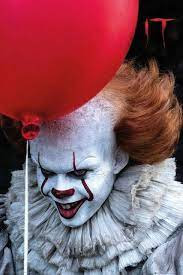
It's not Stephen King but
"The Red Balloon" appeared in
Weird Tales and it is one of the
weirdest tales in the Q. Patrick canon.
It's one of two stories that was cut
from Hunt in the Dark 
Hunt in the Dark and Other Deadly Pursuits, which was just published by Crippen & Landru, will be the last book I do with that entity. Here at my blog, which is entering its tenth year and where I have the last word, I thought I would publish my Hunt introduction in its original form, before I was told to cut and rework it by the new publisher of C&L, who wanted to shorten the length of the book. 

I was rather displeased and for this and additional reasons, which I won't go into here, I decided to end my affiliation with the publisher today.  So here please enjoy my last Crippen & Landru introduction, slightly modified, but including reference to the two deleted stories.--TPT

Under the pseudonyms Q. Patrick, Patrick Quentin and Jonathan Stagge, mid-century mystery authors Richard “Rickie” Webb and Hugh Callingham Wheeler, native Englishmen who became naturalized American citizens, wrote and published, both together and separately, nearly forty detective novels and over fifty works of short crime fiction.  Since 2015 American publisher Crippen & Landru and I have been devoting effort to recovering Rickie Webb’s and Hugh Wheeler’s rich legacy of short crime fiction, which for the most part was published under the Q. Patrick pen name.  Crippen & Landru’s newest book, Hunt in the Dark and Other Fatal Pursuits, collects six of Q. Patrick’s works in shorter forms: two novellas, two novelettes and two short stories.  Included are the presumably final recovered tales of the criminous adventures of Rickie Webb’s and Hugh Wheeler’s series characters Peter and Iris Duluth (“Hunt in the Dark”) and Dr. Hugh Westlake (“The Frightened Landlady”), as well as four other tales of deathly doings: the ingenious shorts “Killed by Time” and “The Woman Who Waited” and the noirish novelettes “The Hated Woman” and “This Way Out.”  In these tales readers will find dark fantasies of murder, full of flawed men and fatal women, as they walk the wilder, pulpier side of Rickie Webb’s and Hugh Wheeler’s rich legacy of short crime fiction.  Additionally, there are two final murder stories by Rickie Webb which, though they are not included in Hunt in the Dark, offer a queer but compelling coda to a talented man’s own complicated journey. 

*******

            Initially in the 1930s Rickie Webb and Hugh Wheeler lucratively tapped diverse markets for their short fiction in Street & Smith’s Detective Story Magazine, one of America’s premier purveyors of “pulp” crime fiction (so named for its cheap pages made from wood pulp), which aimed primarily at a male audience, and in The American Magazine, a so-called “slick” (so named on account of its more expensive, glossy paper) with a readership composed to a great extent of middle-class women.  Among the pulp detective fiction Rickie and Hugh published at this time were three serial novels and a novella, all of which appeared under the pseudonym Q. Patrick in Detective Story Magazine, about Dr. Hugh Cavendish Westlake, a widowed New England country doctor with an irrepressibly rambunctious young daughter, Dawn, who manages, albeit usually inadvertently, to help her bemused father solve, with the considerable help of series policeman Inspector Cobb, the myriad fiendish murders which cross his path.  That Hugh Cavendish Westlake shares the same initials—H. C. W.—with Hugh Callingham Wheeler surely is no accident.

            The serial Dr. Westlake novels--The Dogs Do Bark, The Scarlet Circle and Murder or Mercy?—all were later published in hardback editions by “Jonathan Stagge,” albeit in the case of The Scarlet Circle only after a lag of seven years, due perhaps to the possibility that the novella in 1937 may have helped inspire two horrific real-life copycat murders in Queens, New York.  However, the second Hugh Westlake adventure, the novella “The Frightened Landlady,” which was originally published in Detective Story Magazine in December 1935, a month after The Dogs Do Bark, was never expanded as a novel.  It now appears in print in English for the first time in eighty-five years—an exciting event for admirers of Jonathan Stagge’s ingenious murder cases.

            Dr. Westlake’s daughter Dawn does not put in an appearance in this exceptionally grim story, happily for her being “away at the shore with friends.”  However, the doctor’s investigative partner Inspector Cobb, Chief of Police of Grovestown (where the doctor, who normally resides twenty miles away in Kenmore, is substituting for his vacationing colleague Dr. Hammond), provides some timely assistance.  Young Dawn, who is present in spirit if you will, manages to do her part as well to help her father and Inspector Cobb crack the weird and gruesome case, which turns extremely nasty.  “The affair ended with a brutal murder and the unearthing of another crime so fantastic in its twisted abnormality that I cannot help wondering whether I am violating the ethics of my profession in setting it down,” Dr. Westlake forebodingly announces in the first lines of the novella.  What stouthearted mystery fan could resist?

            In an opening reminiscent of the strange consultations once held by a certain eminent detective at 221b Baker Street, Dr. Westlake is visited by Mrs. Eva Bellman, a highly respectable sixtyish Grovestown landlady who believes she must be suffering from some malady of the eyes (like Hugh Wheeler in real life), on account of the seemingly impossible transformations which she imagines have been taking place around her in her building.  Gladioluses in a vase have turned into zinnias and back again, for example, while a pet canary has gone from life to death (stabbed with a paper knife and pinned to a pillow) to life again.  Dr. Westlake assures the frightened landlady that there is nothing physically wrong with her, yet he is highly intrigued all the same by her problem.  “Possibly my recent connection with the unpleasant series of murders near my home in Kenmore had given me a taste for the bizarre,” he speculates, recalling the ghastly case earlier detailed in Detective Story Magazine in The Dogs Do Bark. 

            It is not long before Dr. Westlake calls upon Mrs. Bellman at her building, where he finds that things are even queerer than he had imagined.  “The Frightened Landlady” is a fine baroque mystery tale with some classic twists and a twisted crime.  To be sure, it shares affinities with another Webb and Wheeler work, “Danger Next Door,” a novella published in Detective Story Magazine in May 1937 which fourteen years later was expanded under the same name as a novel (now long out-of-print); yet Hugh Westlake fans will by no means want to miss “The Frightened Landlady.”  It makes an exciting addition to the distinguished Hugh Westlake crime canon.

            “Killed by Time” and “The Hated Woman” like “The Frightened Landlady” are among the earliest pulp crime pieces published by Rickie and Hugh.  They appeared in Detective Story Magazine in, respectively, October 1935 and February 1936.  The former is a pure problem detective story, though a rather memorably gruesome one, along the lines of something mystery genre master John Dickson Carr might have devised.  In it Inspector Groves (of Grovestown perhaps?) is summoned on the scene to investigate the murder, at the home of esteemed brain surgeon Doctor Cobden (shades of Inspector Cobb), of Cobden’s son-in-law, Julius van Holdt, a woman-chasing wastrel.  The dead man was discovered gruesomely slain on the couch in Doctor Cobden’s office, his face “no long calm or handsome”: “One eye was closed as if in sleep, but the other—or rather, the place where the other had been—was a hideous red gash, a gaping void.  It was as though someone had stabbed persistently and accurately at the eye with a sharp, thin weapon.”  “[P]ossibly an ice-pick,” speculates the phlegmatic medical examiner.  Steel yourselves, readers!

            The novelette “The Hated Woman” presents one of the most unsympathetic daughters of Eve in the Webb-Wheeler canon in the person of Lila Trent, the eponymous hated woman of the title.  Lila, it soon becomes manifest, is very hated indeed, and deservedly so, being a selfish, spiteful individual concerned only with preserving her own diminishing physical charms (past forty, Lila’s looks are being “killed by time”), so that she can continue successfully to pursue handsome young men, her longtime marriage notwithstanding.  When she is discovered dead in the kitchen of her apartment at the Vandolan Hotel, her head bloodily battered by blows from a wood hatchet, there is no shortage of suspects in her murder, including her long-suffering husband, Paul Trent, a chemistry researcher at the local university; Larry Graves, a strapping yet weak-willed blond whom the smitten Lila had loaned five thousand dollars, with sexual conditions attached, to start an auto garage; Larry’s girlfriend Claire French, the coolly attractive and determined owner of her own beauty parlor; and Sam Nolan, the Vandolan Hotel’s strapping brunet electrician, patently on the make.  (“If you ever need me, Mrs. Trenton, it’s easy to get me,” he pointedly advises Lila.)  The police are stymied by the multiplicity of suspects (truly Lila and Paul’s apartment was something like Grand Central Station on the night of the murder), leaving Paul Trent’s likeable colleague in the chemistry department at the university, Professor Gilbert Comroy, to bring the crime home to its perpetrator. 

            Like “The Frightened Landlady” and “Killed by Time,” “The Hated Woman” has the fingerprints of Rickie Webb all over it, in its depictions of nasty people and grisly murders and its transgressive gay subtext, among the most prominent in the writing of Webb and Wheeler.  In Lila’s relationships with Larry Graves and Sam Nolan, it is easy to discern what Marc Fisher, in his essay “The Life of a Trophy Boy”--a meditation on the life and death of Andrew Cunanan, a “high-class gay prostitute” and serial murderer who infamously slew fashion designer Gianni Versace in 1997--termed the “gay paradigm” of an older gay sugar daddy, his looks fading, avidly pursuing hustling young hunks.  “You’re nothing but a gigolo—a gigolo,” a disgusted (and somewhat priggish) Claire castigates Larry at one point, while studly Sam Nolan, clad in his overalls, provocatively comments to Lila, “Geez…I wish I was a girl.  Maybe then you could use me around this place, Mrs. Trenton.  I’m pretty good at housework, too.  Used to be a houseboy when I was a kid.”  A positive portrayal in the novelette of a same-sex relationship can be seen with middle-aged academic colleagues and best friends Paul Trent and Gilbert Conroy, who resemble pals of Rickie’s from the University of Pennsylvania and other colleges.  Seven years after the publication of “The Hated Woman,” Rickie Webb ironically made a disastrous six-month marriage with a noted woman popular author, Frances Winwar, starkly contrasting with the years of contentment he enjoyed with his writing partner Hugh Wheeler, who also was his companion of many years. 

            A much more positive depiction of a heterosexual couple is found in “Hunt in the Dark” (published in 1942 in Short Stories), which--like “Death Rides the Ski-Tow” and “Murder with Flowers,” both of which appeared in The American Magazine the previous year (and have since been collected in Crippen & Landru’s 2016 volume The Puzzles of Peter Duluth)--is another thrilling wartime adventure of theater producer Peter Duluth and his charming and glamorous actress wife Iris, lead characters in Rickie and Hugh’s Patrick Quentin “Puzzle” series of novels.  (Even here, however, some gay subtext is slipped in when Peter tells us that on a sleuthing visit to a Manhattan book and record shop, he pauses occasionally to pretend to glance at something, like “an old copy of Leaves of Grass” and “a Strength and Health magazine from 1936.”)

            This time Peter and Iris run afoul of a deadly terrorist plot against the United States, recalling the “Black Tom” explosion of 1916, an act of German sabotage at a major munitions center at Black Tom, an artificial island adjacent to Liberty Island in New York Harbor.  (Peter specifically mentions the Black Tom attack.)  On the side of Peter and the irrepressible Iris in their desperate against-the-odds attempt to foil the Nazis’ deadly machinations (Iris has “always been the Lady Macbeth of our team, taking danger and disaster in her stride,” observes Peter), are the couple’s indomitable black cook Aloma and her hulk of a husband, Rudolph, the latter, we are cheekily told, mysteriously returned “after a long absence upstate.”  The ultimate moral of “Hunt in the Dark” seems to be, “Good help is hard to find,” so hang onto it when you find it.  Within a few years, Rickie and Hugh at their home at Twin Hills Farm in Monterey, Massachusetts would hire a handsome black cook, Johnny Grubbs, a move which ironically would help lead to the irrevocable sundering of Rickie and Hugh’s companionship, something which had not happened when Rickie had been briefly married to Frances Winwar.

            We return to the formal problem detective short story with “The Woman Who Waited,” a fine brief tale of detection which would have melded perfectly with the lauded Lieutenant Trant short stories that Rickie and Hugh published over the decade from 1945 to 1955 (and which have since been collected in Crippen & Landru’s 2019 volume The Cases of Lieutenant Timothy Trant).   In “The Woman Who Waited,” which first appeared in The Shadow in January 1945, Trant stand-in Inspector Macrae is tasked with determining the identity of the mysterious woman in black who shot and killed Ellery Trimble with his own gun in his parked car outside his Twin-Town Department Store, “the one big league emporium in the dual community of Stuart-Cartersville.”  Left bizarrely sprawled across the dead man’s corpse are a dozen “pairs of silk—real silk—stockings,” resembling nothing so much as “grotesque, elongated caterpillars.”  Macrae manages to pin the guilt for a truly audacious act of murder on the correct culprit, doubtlessly one whom Lieutenant Trant, with his well-known penchant for murderesses, would have relished encountering. 

            Like “Hunt in the Dark” and “The Woman Who Waited,” “This Way Out,” published in Mystery Book Magazine in March 1947, has sophisticated touches reflective of the fine hand of Hugh Wheeler, a still youngish man of thirty-five when the novelette was published.  Hugh’s writing talent had burgeoned over the years while that of Rickie, who suffered from various debilitating physical and mental maladies after his return from wartime service with the Red Cross in Hollandia, New Guinea, had declined.  (Hugh, who suffered from diplopia, or double vision, for a time served stateside in the Medical Corps at Fort Dix, New Jersey.)  In Hugh’s hands “This Way Out” rises from the pulpish danses macabres of the “The Frightened Landlady” and “The Hated Woman” to the operatic heights of the tragically doomed romances of Forties film noir. 

            As in many of the postwar film noirs, the protagonist of “This Way Out” is a disillusioned World War Two veteran returned home, like Rickie Webb, from overseas service.  In this case it is Steve Glenn, who when he beats up playboy Tony Dort at the beginning of the story has been officially honorably discharged from the Army for but a few hours and symbolically is still wearing the uniform he had donned to fight the Japanese.  Getting even with Tony was something Steve had been living for over “eighteen long, bitter months” of combat in the Pacific, at New Guinea and Leyte, since Steve’s beautiful blonde ex-wife, Celia, had commenced a wild fling with Tony and persuaded Steve to divorce her.  The embittered vet exits Tony’s apartment, having left the playboy knocked out and flat on his back, and he heads for liquid consolation to a bar.  Later, however, with the assault and the drinks having failed to make him feel any better about the situation, Steve decides to check up on Tony at the apartment, where he discovers to his mortification that in the interim someone has shot Tony--dead. 

            Finding Celia’s small white-gold, emerald-encrusted compact, a gift from him during their marriage, at the scene of the crime, Tony jumps to the conclusion that Celia must be Tony’s killer, and he sets out at all costs to protect her from the consequences of the crime he thinks she committed.  However, Steve soon learns there are other promising candidates besides Celia for the role of the odious Tony’s murderer, including Celia’s virginal younger sister Dennie, who during the war has blossomed into a lovely blonde simulacrum of her sibling; Virginia Dort, Tony’s cynical estranged wife; 4-F Roy Chappell, who fashions metal into jewelry and trinkets of exquisite beauty, like Celia’s compact; Goody Taylor, aging man-about-town (“Goody Taylor?  I thought he’d been embalmed years ago.”); and a “cool, metallic blonde” named Janice, the latest of Tony Dort’s flings. 
            Things get so very complicated, Steve reflects morosely during the course of this twisting tale: “[T]he perversity of life got under his skin.  Celia loved Tony; Steve loved Celia; Dennie loved Steve.  He felt a sudden, savage hunger for the old world of mud and death in the Pacific.  At least you knew where you were in a foxhole.  Nobody loved anybody there.”  Like Roy Chappell’s intricately bejeweled creations, “This Way Out” is exquisitely fashioned, a moving tale of fatal misunderstanding that, though it likely was mostly composed by Hugh Wheeler, seems to have been informed by some of Rickie Webb’s recent disillusioning experiences, as the two men’s own relationship, like the fictional one of the seemingly imperishably insouciant Peter and Iris Duluth, became more “complicated” during the postwar years. 

            Rickie and Hugh had permanently parted ways by 1952, with Rickie leaving the house they had shared at Twin Hills Farm for France, never to return again except for occasional visits, when his failing health permitted.  He passed away fourteen years later, at the age of sixty-five.  Hugh, who remained with Johnny Grubbs at Twin Hills Farm for the rest of his life, survived Rickie by twenty-one years, during which time he worked with entertainment world giants Stephen Sondheim and Harold Prince, among many others, and attained prominence as a writer for stage and screen, producing the scripts for the films Something for Everyone (1970), Cabaret (1972) and Nijinsky (1980), authoring the acclaimed 1961 plays  Big Fish, Little Fish and Look: We’ve Come Through and winning three Tony Awards for his books for the musicals A Little Night Music (1973), Candide (1974) and Sweeney Todd (1979).

            Until Rickie’s death Hugh continued to write crime fiction under the pseudonym Patrick Quentin, without any contribution from Rickie.  Nevertheless, in the 1950s Rickie himself, using the Q. Patrick pseudonym, made a few sporadic stabs at crime writing, including two strange short stories, “The Predestined” and “The Red Balloon,” appropriately published in 1954 and 1953 in Weird Tales, and likely the paperback original The Girl on the Gallows, a study of the Thompson-Bywaters murder case that was published in 1954 (since reprinted as an eBook by Mysterious Press/Open Road).  At the end of his writing career Rickie had returned to his grim beginnings in the pulps, even as Hugh inhabited the more rarefied and lucrative world of the “slicks” and the sophisticated Patrick Quentin novels.  Rickie’s two weird crime tales, although not included in Hunt in the Dark, constitute a strange but ultimately sadly fitting legacy to his and Hugh’s noirish crime fiction. 

            “The Predestined,” an inverted crime story which first appeared in Britannia and Eve in August 1953, is a malevolent tale reflective of Rickie Webb’s preoccupation in his crime fiction with cruelty and sadism as well as aging and its concomitant physical decay.  It shares affinity with a 1937 short story, “Frightened Killer” that Rickie and Hugh published in 1937 in Detective Story Magazine, under their seldom used pen name, “Dick Callingham,” as well as two Q. Patrick school crime tales later collected in 1962 in the Edgar-winning volume The Ordeal of Mrs. Snow (since reprinted by Mysterious Press/Open Road), “Little Boy Lost” and “Portrait of a Murderer.”  All three of these earlier stories likely were written by Rickie.

            “The Predestined” episodically traces the life in England, from indulged childhood to youthful years at public school and Cambridge University to dissolute adulthood, of a selfish, greedy brute named Jasper Dogerty, who recurrently suffers from painful constricting sensations at his throat that leave ephemeral purple welts.  Over the course of the story Jasper transitions from a public school and Cambridge athlete with a “perfect physique and regular features” to a balding thirty-four-year-old with an incipient double chin who works for a perfume company and sponges off gullible older women like Sophie Cain, a wealthy widow whom out of financial calculation he marries.  Unfortunately, Sophie, though she gratifyingly makes Jasper the heir to her sizable estate, comes encumbered with the intensely religious and to Jasper extremely objectionable Miss Grace Goodman, a censorious busybody companion who keeps zealous watch over both her mistress and the household accounts.  Jasper comes to feel that something will have to be done about this situation….  The end result may not surprise you, but the uncompromising bleakness of the story, which includes certain biographical elements from Rickie’s own life, leaves its mark, if you will.

            The weirdly compelling “The Red Balloon” saw the penultimate appearance in short fiction form of peripatetic series sleuth Lieutenant Timothy Trant, who began as a series character in a couple of 1930s Q. Patrick novels and a Crimefile, appeared between 1940 and 1955 in nearly two dozen Q. Patrick crime tales and in the 1950s and 1960s was occasionally employed by Hugh as a murder investigator in his solo Patrick Quentin novels.  Although the title of the tale recalls the Oscar-winning French children’s film, Le Ballon Rouge (1956), it could not be more different from that whimsical French fantasy, being an account of the investigation into the horrific unnatural deaths of two young girls, Minnie and Evie Greiser, found gruesomely slain behind some bushes outside the Braeside School for Girls, where they had been participating in a rehearsal for a nativity play for the school’s forthcoming Christmas festival.  The bodies of the dead girls were “shriveled and shrunken like two little old monkeys, or like corpses deep-buried centuries ago.”  In classic fashion, falling snow covered any possible traces left by the murderer.  The only clue to the crimes (if clue it indeed is) is a vanished red balloon that witnesses reported seeing floating near where the girls’ bodies were discovered. 

            The narrator of the story, a newspaper reporter who is himself the father of a Braeside student, is sent to cover the case, putting him, in an additional coincidence, in contact with the head of the murder investigation, Lieutenant Timothy Trant, an old Princeton classmate whose name is “synonymous with homicide.”  The great Trant, however, reports that for once even he is stymied.  “It’s all very well for you,” he gloomily tells the reporter, summoning the sinister shades of pulp fiction: “You journalists can spin out yarns on vampires, murderous balloons, flying saucers, little men, unknown poisons, impossible maladies—anything your readers will swallow.”  He, however, has to deal in rational facts. 

            These, such as they are, come to Trant courtesy of an eccentric, Nobel Prize winning scientist, Professor Edgar Saltus, who, in yet another coincidence (they evidently come in threes), happens to be the uncle of the narrator.  Invoking the name of Charles Fort, the famed researcher into anomalous phenomena, Saltus points out to Trant that over recorded history around the world there has been a cyclical series of sudden, localized, unexplained mass deaths among children, their strange demises all resembling that of the Greiser girls.  Saltus has an explanation for the whole ghastly parade of death, but it seems utterly fantastic.  Only the dramatic finale reveals the truth, as Professor Saltus alludes to King Claudius’ memorable lines in Shakespeare’s Hamlet: “When sorrows come, they come not single spies, But in battalions!”
            In the Forties and Fifties sorrows certainly came in battalions for Rickie Webb, as he lost his health, his looks, his writing career and his longtime companion Hugh Wheeler, the love of his life.  Many of Rickie and Hugh’s stories in Hunt in the Dark and Other Fatal Pursuits capture some of the darkness Rickie often felt in his own heart, never more bleakly than in “This Way Out,” when the narrator observes, “During the evening there had been moments of wild racing hope. Moments when he thought he was on top and could thumb his nose at doom.  They hadn’t been real of course….He’d been licked from the start.”  Much of Golden Age detective fiction, in which death so often is nothing more (or less) than an amusing diversion, recalls lines from another great Shakespeare play, King Lear: “As flies to wanton boys, are we to the gods.  They kill us for their sport.”  In some of the finest examples of the crime fiction of Rickie Webb and Hugh Wheeler, however, murder is no frolic.