Showing posts with label Cecil John Charles Street. Show all posts

Friday, June 21, 2013

Humdrum Rides Again: Southern Electric Murder (1938), by Francis John Whaley

"And what a case!  It's difficult to follow it all, even when it's explained."
--Southern Electric Murder, F. J. Whaley

As the author of, you may have heard by now, Masters of the "Humdrum" Mystery, I'm a man who knows humdrum like the back of my hand (by the way, those who haven't seen it yet, please check out the review of and interview about Masters over at the Past Offences blog).  And Francis John Whaley's Southern Electric Murder is definitely Humdrum!

Critic and crime writer Julian Symons meant this word more as a term of disparagement, while I  to the contrary believe it should be worn as a badge of honor.  In my view there is nothing wrong with writing a detective novel that focuses rigorously on the puzzle plot, if one does it well.  Indeed, such an emphasis seems rather charmingly quaint today, I think.

Whaley's Southern Electric Murder is more like a Freeman Wills Crofts novel than about any other book not penned by Crofts that I have read.  It concerns business malfeasance, trains and timetables, all in the classic Crofts manner.

The particular industry involved is automobiles, which also gives the novel similarity to books by Cecil John Charles Street (a great motoring enthusiast), particularly his John Rhode novels The Motor Rally Mystery (1933) and Mystery at Olympia (1935).

Victoria Station--where a journey started

The plot of Southern is absolutely dense with railway movements and times, all involving the railway line running from Victoria Station, London to Brighton, Sussex.  Particularly important are stops at Hove and Haywards Heath.  About halfway through the book, these stations will start to feel like one's Hove away from Hove, so to speak! In the second half of the book, the setting shifts to the Hog's Back, a ridge near Guildford, Surrey, which also is the setting of Freeman Wills Crofts' The Hog's Back Mystery, 1933. 

When a dead body is discovered in a compartment of a train pulling into Worthing station (west of Brighton), things soon start to pop.  The dead man, who has been shot, is Christopher Strange, one of the directors of the Jupiter Automobile Company, the most important rival to Hartman's Automobile Company.

The latter concern is run by Sir Julius Hartman, one of Britain's most prominent Jewish businessmen.  Sir Julius is known to have it in for Jupiter's because one of its directors, Colonel Evan Stonor, is a fascist sympathizer.  Hartman soon becomes a suspect in Strange's murder, as do Stonor and the third Jupiter director, the wily Frank Pendrick, who has been paying his attentions of late to Strange's lovely wife, Norah.  And don't overlook Strange's oily confidential clerk, Pratt.

But there are so many questions.  Why was Christopher Strange wearing a false beard and a cheap suit, for example?  Who was the man with the eye patch who got off at Hove?  And why did Strange make that mysterious stop at Haywards Heath?

Hove Station--where the man with the eye patch left the train
see Hove Daily Photo blog photo copyright Liz Marley 2009
See Marley's Knitting on the Green blog

Investigating the case for Scotland Yard are Inspector John Bean (I suppose in a film he could be played by Sean Bean) and Sergeant Harold Baker.  Sergeant Baker is one of those well-bred, prep school, Cambridge and Hendon Police College boys and, oh my, does Inspector Bean just hate him!  Bean is like Inspector French turned inside-out as far as temperament goes, though he shares French's passion for police routine.

Here I was also rather reminded of John Street's Superintendent Hanslet and Sergeant Jimmy Waghorn, introduced in his John Rhode series a few years earlier, though Hanslet is a much more appealing character and Street is rather less biased in favor of his posh police tec.  But the hostile Bean-Baker relationship is amusingly handled by Whaley and has definite interest.  The second half of the book takes place six months later and is largely devoted to Baker, who has been promoted.

There is also a Bulldog Drummond sort of character, an idle, independently wealthy chap named George Curtis, who is a great pal of Baker's.  At one crucial point in the novel, when everyone in the police force is lamenting that, hang it, they can't use American third degree methods on a suspected blackmailer to extract some badly needed information, Curtis comes in quite handy (for the squeamish: no beatings actually take place, though psychological abuse does).

I could have done without this Curtis character entirely.  It's interesting that Whaley is so condemnatory of fascism and racial prejudice but seems to miss the rubber hose.  Oh, well, one can't expect absolute adherence to modern values in a Golden Age detective novel!

Worthing Station--where a journey ended

My biggest complaint with the novel is that there is no map and no actual tabulated timetable.  Freeman Wills Crofts and John Street--both engineers--would never have left out these sorts of visual aids-- especially helpful, I think, if you are a poor American reader (admittedly, Whaley's novel was never reprinted in the United States).  Still, I enjoyed Southern Electric Murder a great deal.  If you are partial to plot-dense, geometrical Golden Age mysteries, this one is for you.

All aboard! Brighton Main Line

Note: for biographical information on Francis John Whaley, see my immediately previous post.

Wednesday, April 25, 2012

Rhineland Romance: Castle Skull (1931), by John Dickson Carr

John Dickson Carr's first detective series, which chronicled the exploits of French magistrate Henry Bencolin, is a short one, comprised of four novels Carr published from 1930 to 1932, plus a final volume, The Four False Weapons, that appeared in 1937.

Castle Skull (1931) is the third of the Henri Bencolin mysteries.  Like the other early novels in the series (It Walks by Night, The Lost Gallows and The Corpse in the Waxworks), it has  a splendidly lurid title, redolent of exoticism, the outre and horror.  Although Carr continued to employ these elements in many of his books over his long and successful mystery writing career, he toned them down somewhat from the early novels, where the horrific really predominates (as has been observed, I believe, by S. T. Joshi, It Walks by Night might be a pulp horror novel title).

Certainly Castle Skull is steeped in the outre.  To begin with there's the highly Gothic setting, in the German Rhineland.

Many mysteries of the Golden Age take place in country houses, but how many take place in castles?  And what a castle is Castle Skull!  Yes, its highly eccentric owner, the larger than life magician Maleger, deliberately designed it to resemble a skull.  This 1940s Pocket edition captures the castle rather well, I think (except for the lovely sunny sky).  Not only does the castle look like a skull, but it is equipped with all the creepy paraphernalia you could ever ask for in such an abode; and Carr, as was his wont, makes the most of this.

The novel opens with quite a bit of back story.  Maleger, we learn, was murdered some twenty years earlier, his body thrown out of a train carriage into the Rhine.  Somehow this was accomplished even though Maleger's carriage was under observation the whole time and no one else was seen entering it (one of Carr's patented miracle problems, very nicely worked out too).

Maleger's estate was left to two friends, a Belgian banker named D'Aunay and a prominent English stage actor named Myron Alison.  A few weeks before the novel opens, something very bad happened to Myron Alison.  He was shot several times and then for good measure set on fire.  His blazing body was espied on the crazily grinning battlements of Castle Skull.

Bencolin investigates
the dark depths of
Castle Skull
Just imagine what an opening this would make for a film! It strikes me once again what opportunities modern filmmakers are missing in treating John Dickson Carr as mystery's Mr. Cellophane, even as they film the umpteenth version of a Miss Marple mystery (now with rewritten ending!).  Unfortunately Carr himself does not make the most of it, because the the story of the murder is told secondhand to Bencolin and his young Watson, Jeff Marle, rather than being shown directly to the reader.  Obviously, it seems to me, the novel should have opened with the immolation scene.  We know from such later bravura Carr set-pieces as the exploding hot-air balloon sequence in Carr's wonderful historical mystery novel Captain Cut-Throat (1955) that Carr was absolute aces at directly depicting evocative action scenes.  But enough about that--back to further developments at Castle Skull!

Henri Bencolin is brought into the case informally and is soon investigating with good old, forgettable Jeff (first in a long, long line of many writer stand-ins for the author).  Across the river from Castle Skull is the country house of Myron Alison, where a house party was taking place during Myron's murder, conveniently providing us with our suspects.  There's Myron's sister, Agatha, known as "The Duchess"--even though she's not one; a famous violinist; D'Aunay and his wife; a young English gentleman; and a nice young woman, though modern.  There's also a middle-aged journalist hanging about the place, who happily is chock full of nuggets of Maleger-Myron Alison back story.

The mental duel between Lionel Atwill's Inspector Krogh
and Basil Rathbone's Baron Wolf von Frankenstein
in Son of Frankenstein (1939) is similar to the
 of Bencolin-Von Arnheim in Castle Skull
Soon Bencolin and Jeff are joined by Baron Sigmund von Arnheim, one of those stock monocled, know-it-all Prussian types common to Anglo-American books and films of that era. Von Arnheim and Bencolin are longtime rivals, so the two engage in a competition to solve the case, bandying much surfacely polite, improbably theatrical language with each other, in the highly archaic fashion that Carr, who seems to have wanted to live as an English cavalier in the seventeenth century, so much admired.

Just 25 when this novel was published, Carr handles the solution section of the novel (40 pages!) with laudable dexterity.  Von Arnheim solves the case!  Or does he....

Besides being grippingly narrated, the solution is eminently fair play, I think.  One has to admire not only Carr's ingenuity with murder designs--a skill John Street, for example, had too--but also Carr's admirable clue placement, which at times rivals the great Agatha Christie.  My only complaint (besides the absence of a castle floor plan--but see this extraordinary webpage on this matter) with Castle Skull is that the characters really don't do justice the superb setting.

The two really interesting characters in Castle Skull are Maleger and Myron Alison, both of whom, as murder victims, are off the stage when the novel opens.  As Douglas G. Greene has noted in his superb biography of Carr, John Dickson Carr: The Man Who Explained Miracles (1995), Carr somewhat softened Bencolin in Castle Skull, making him "slightly more human," but this softening "doesn't fit the personality that Carr has developed for Bencolin"--it merely makes him duller.  As for the country house crowd, they are sticks, with the exception of Agatha Alison, who is interesting because she is such an outlandish and improbable character.  I would have sworn Carr meant her to be a broad parody of Dorothy L. Sayers, but Carr would not have known Sayers in 1931.

Dorothy L. Sayers
"Duchess" of Deception
Here is Carr's description of the stout, mannish, Duchess (who also smokes cigars, drinks stout and plays poker), which really does seem to foreshadow Sayers at Detection Club meetings in the 1940s and 1950s (judging by the uninhibited recollections of Christianna Brand): "She floundered in, her bulk compressed into a tight black gown which caused startling bulges in extraordinary places."

But it's the way the Duchess talks that's really extraordinary:

"Come right in, young fella-me-lad!  Have a bottle of stout.  Always drink three, myself, before I turn in."

"Well, well, you just tell the old Duchess about it!  Plague take me!  When all your fancy detectives are stumped, I'm going to take a hand!"

"H'm.  Is that so?  Damme!...H'm.  Writer, b'Gad!  Play rugger, don't you?"
"Baseball," I said, "I'm an American."
"You do?  Well, hang me!--And look here, laddie, don't you think that because I'm a bloody Britisher I don't know the outfield from home plate.  Listen.  I saw the whole world series in '09, the year Wild Bill pitched against the Pirates...."

Put Sir Henry Merrivale in a dress
and you get Agatha Alison
And so on.  All this conversation is uttered while Agatha is sitting "behind her table in a flaring negligee, drinking Guinness' stout."  From the words--especially recalling how Carr's later series detective Sir Henry Merrivale loves baseball too--I felt certain the Duchess was really Sir Henry Merrivale in drag, perhaps on a secret undercover mission in this very queer castle.

Heck, even now I still think "she" may have been, although this was one question even the great Henri Bencolin did not resolve!

Well, this finishes for now my Continental tour.  I'm headed back to the States (There's no place like home!), but will be stopping off briefly in a desert clime.  Who will I visit there?  Stop by tomorrow and see!--The Passing Tramp.

Tuesday, March 20, 2012

The Land Endureth: John Rhode's Licensed for Murder (1958) and Ruth Rendell's Not in the Flesh (2007) (Then and Now #4)

"One generation passeth away and another generation cometh, but the land endureth forever."


Even the finest longtime prolific mystery and crime writers in their later years may suffer waning inspiration and even capacity.  Elephants Can Remember (1972) and Postern of Fate (1973), the last two novels Agatha Christie wrote, are, in my view, quite dull and meandering (the latter, indeed, approaches incoherence).  When Christie produced these two books, she was in her eighties and had already written over sixty novels (Elephants and Postern were her sixty-fifth and sixty-sixth, respectively).  Christie had been writing mystery novels for over half a century, having produced her first one, The Mysteriousness Affair at Styles, in 1920.

Elephants may remember
but by 1972 Agatha Christie
occasionally forgot

Ruth Rendell, one of the great modern-day British Queens of Crime, will publish her sixty-second and sixty-third crime novels in 2012 (this is the first year since 2008 that she has produced two novels in one year).  Like Christie in the early 1970s, Ruth Rendell is now an octogenarian, having celebrated her eighty-second birthday last month.  She published her first mystery novel, From Doon with Death, nearly fifty years ago, in 1964.

Ruth Rendell (b. 1930)
Modern day Crime Queen

Incredible as this may seem, Cecil John Charles Street, the other mystery writer with whom I am concerned in this piece, published (primarily under two pseudonyms, John Rhode and Miles Burton) more mystery novels than Agatha Christie and Ruth Rendell combined: 143 (or 144, depending on how one categorizes The Alarm).  Even more incredible, he produced his 143 mystery novels in a "mere" thirty-eight years, between 1924 and 1961 (making an average of four novels a year, rounding up).  Street probably is the most prolific true detective novelist in the history of the mystery genre (coincidentally, he died, at the age of eighty, the same year Ruth Rendell's first novel was published).

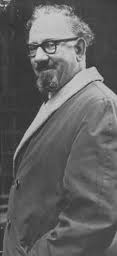
John Street (1884-1964)
Golden Age Crime King

In this two-part piece I look at a pair of novels: Licensed for Murder (1958), by John Rhode (Street's best-known pseudonym) and the more recent Not in the Flesh (2007), by Ruth Rendell.  Though both books come from late in the authors' careers, when both authors were in their seventies (Street 74, Rendell 77), they are, I think, superior to most of Agatha Christie's later efforts.  Moreover, they have surprising elements in common, most strikingly a shared interest in social changes transpiring in rural England (note: I adopt the American spelling for the Rhode novel).

English edition

As "John Rhode" Cecil John Charles Street was a founding member of the Detection Club and one of the most popular English detective novelists in the 1920s and 1930s (after 1926 all his mystery novels were published in the United States as well as Britain, in the former country by Dodd, Mead).  His detective, the acerbic, elderly scientist Dr. Lancelot Priestley, was one of the true Great Detectives of the era, with a positive genius for solving the scientifically and mechanically complex crimes his creator devised in novel after novel.  If Agatha Christie was the era's Mistress of Misdirection, John Rhode was its Master of Murder Means.

American edition (Dodd, Mead)
Licensed for Murder was John Street's seventy-second John Rhode novel (and the sixty-seventh outing for Dr. Priestley).  There would be only five more over the next few years, none of them really recommendable. Yet Licensed for Murder is surprisingly good for this very late date, offering readers a complex plot and a persuasive rural setting.

The noted American mystery critic Anthony Boucher praised Licensed for Murder, writing in the New York Times that the "detection is competent; the murders have novelty and ingenuity to recommend them; and the background details on the management of a village inn are fascinating.  Slow and heavy, but kind of nice."


John Street enjoyed
a stout pipe and a strong pint
Anthony Boucher was discerning in his assessment of Licensed for Murder.  Its murder plot is one of Street's cleverest and the late-1950s declining rural inn setting is done with conviction and authority, reflecting in plain prose the author's over half-century familiarity with public houses and his fascination with geography and landscape (Street had been an artillerist in World War One).

Licensed for Murder opens with the managing director of Hinkley’s Brewery, Mr. Godstow, learning that the elderly tenants of the Knapper’s Arms plan shortly to relinquish the inn's tenancy, which they have held for twenty-nine years.  Godstow fears that finding new tenants will prove a stiff challenge:

The Knapper’s Arms was certainly not an attractive proposition.  A century ago Famford had been a flourishing center of the flint-knapping industry....But the industry had long since...come to an end.  The population of the straggling village had decreased, and now consisted almost entirely of labourers on the surrounding farms....
How was a tenant to be found for such a house as the Knapper’s Arms?...[T]he property included six acres of land, enough for a smallholding.  But it wasn’t everybody who would be attracted by the prospect of serving in the bar during opening hours and working on the land for the rest of the day….Electricity had been laid on during the past five years, but water still had to be pumped by hand from a well, and there was no bathroom.  The only available public transport was the bus service along the main road between Maltchester and Whitby.


After nearly thirty years Hinkley's Brewery must find new tenants for the Knapper's Arms
for fascinating information on beer and breweries, see http://beervana.blogspot.com/


Godstow drives to Famford to get a look for himself at the lie of the land, which he finds, as he expected, unpromising:  

From Hall Farm the village of Famford was hidden by an intervening hill.  But when Godstow had driven to the crest of this, the village lay spread out before him: the flint-built church, with its squat tower; the vicarage; a few scattered cottages; and in the centre of all the Knapper’s Arms.  It was large for a village inn and by no means attractive in appearance.  A central block built of brick, with a roof of blue slate.  To this additions had been made from time to time, built of flint or of the local stone.  The whole effect was ugly and without symmetry.  Godstow could imagine a prospective tenant shuddering at first sight of it.

Despite his doubts about the prospects of leasing the Knapper’s Arms, Godstow is able to find an interested couple, the Bilstons.  Surprisingly, the Bilstons are Londoners who want to give up their city jobs and live in the country, confounding Godstow’s prediction that “no Londoner would ever take the Knapper’s Arms.”  After a couple weeks when the Knapper’s Arms is left untenanted, the Bilstons take up occupancy.

Not unexpectedly, however, the locals—such as Mr. Kensal and his wife, the owners of Hall Farm, and the agricultural laborers who work for them--feel the Bilstons don’t quite fit in at Famford.  As Kensal tells his wife after first meeting the Bilstons:

I’m not very greatly taken with him.  He’s got a superior way I don’t like....As for the woman....I can’t believe that her true vocation is to become the landlady of a village pub....If she makes the chaps feel that they are her inferiors, they’ll take to going to the Blue Boar.  They don’t like people who put on airs.


An English village locale reminiscent of fictional Famford


This concern, however, is soon forgotten in the excitement that ensues when Mr. Bilston, taking down sheets of corrugated iron that had been put up over the inn’s great, disused stone fireplace, discovers "a charred and utterly unrecognizable human form."  Cause of death cannot be determined, but murder looks likely and Superintendent James ("Call me Jimmy")Waghorn is called in on the case.  It is assumed that the body was placed in the fireplace and burned during the period between tenancies, but, since the identity of the corpse cannot be definitely established, Jimmy finds his going as rough as the very flint, even after a consultation with his longtime mentor, the by now quite elderly Dr. Priestley.  Only after another death in Famford does truth gradually begin to emerge....


Fancy country houses and posh aristocrats
are absent from Licensed for Murder,
which emphasizes the lives of
workaday farmers and tradespeople


Besides providing a good puzzle, Licensed for Murder offers readers a glimpse of the altered landscape of even traditional English mystery in the 1950s.  Licensed for Murder has no settings of baronets and country houses, only of smallholders and laborers. Even the owners of Hall Farm, the Kensals, are plain, practical people, who concern themselves not with planning house parties for weekending society ladies and men-about-town, but rather with workaday matters like scrubbing eggs and spraying sugar-beets. With Licensed for Murder, then, we are far removed from the glamorous, sophisticated English country house murders of stereotype.


Dr. Priestley on the case!
The rural world of Licensed for Murder is not so different as one might initially think from that of Ruth Rendell's quite interesting 2007 Chief Inspector Wexford novel, Not in the Flesh. To be sure, English society has changed since the 1950s and Rendell does not ignore these changes.  In her novel Rendell demonstrates that she shares John Street's interest in fictionally chronicling social transformation. 


Yet the land endureth, even after the passing of generations. More on Rendell's novel in Part Two! http://thepassingtramp.blogspot.com/2012/03/land-endureth-part-2-john-rhodes.html


Friday, December 30, 2011

Making a Killing: A Review of Agatha Christie: Murder in the Making, by John Curran


In this second volume of extracts from Agatha Christie's notebooks and personal papers, author John Curran offers further illumination into the working life of Agatha Christie and how Christie became the world's most successful mystery writer.  In contrast with his first such foray, Agatha Christie's Secret Notebooks, Curran this time adopts a chronological approach to his material, which I think works quite well.  Christie fans and fans of Golden Age mystery more generally will surely not want to miss this fascinating volume.

John Curran
Curran structures Murder in the Making by decade (1920s-1970s), so that we read about The Secret of Chimneys, say, on pages 95-109 and Passenger to Frankfurt on pages 375-382.  This is a more cohesive and coherent approach then was used in the first book, in my view, and it enhances the newer book significantly.

Additionally, there are interesting scraps tossed in the pot here and there: a trial section deleted from Christie's first detective novel, The Mysterious Affair at Styles; Christie's manuscript version of her article "How I Created Hercule Poirot"; a different--and superior--version of a Miss Marple short story; Christie's copious references to poisons in her notebooks; Christie's booklists and unused ideas (did you know she considered writing a detective novel based on the famous mystery game Cluedo/Clue--I didn't!).

almost became a character
in a Christie novel

Curran's opening chapter, however, is an assessment of how much Christie adhered to the detective fiction tropes established by Edgar Allan Poe and the rules for writing detective fiction promulgated by Ronald Knox and S. S. Van Dine.  Curran supports the view that Christie "mischievously"  and "gleefully" and "joyously" tweaked, bent, "broke" and "shattered" the rules set down by Van Dine and Knox.

What rule could this woman
be mischievously tweaking now?!

This makes for interesting reading (and Curran obviously knows the Christie books like the back of his hand--better than the back of his hand probably!), though I think Van Dine's and Knox's rules can be overemphasized.  There was no requirement that, like Jews and Christians with the Ten Commandments, Golden Age mystery novelists devoutly follow the "Rules" in detail (as Curran notes, Van Dine's injunctions are especially fussy and fiddly).  Even "Humdrum" detective fiction writers like Freeman Wills Crofts and John Street broke the rules on occasion (one of Street's books even anticipates by a quarter century a rules-bending trick used by Christie).  Heck, even Van Dine broke his own rules!

I tend to agree with Alfred Walter Stewart, who wrote Golden Age mysteries under the pen name J. J. Connington, that there was "only one reasonable convention" in detective fiction, that of the very basic principle of fair play: "The reader should always know exactly as much as the detective is supposed to know, and certainly not less than this."

Alfred Walter Stewart (J. J. Connington)
urged that basic fair play is what matters--
the reader must get all the information
that the detective gets

I believe Christie adhered to the fair play convention (though she certainly pushed boundaries). Whatever critics like Van Dine and Raymond Chandler may have said, there is nothing unfair about the solutions of The Murder of Roger Ackroyd and Murder on the Orient Express.

"Only a halfwit could guess it," complained Chandler of the solution to Orient Express.  Guess who didn't guess it.

I have this feeling that certain very intelligent people (like, oh, S. S. Van Dine and Raymond Chandler) did not like being fooled by this unprepossessing, everyday English gentlewoman named Agatha Christie. But fooled they were--and fairly fooled too.

Raymond Chandler:
sour grapes or stern truth telling?

I think the majority of Golden Age critics and readers were with me on this one.  Curran is too knowledgeable to repeat the popular canard that Christie was threatened with expulsion from the Detection Club over her solution to Roger Ackroyd (the Club did not exist when Roger Ackroyd was published), but he does write that the "civilised outrage that followed the publication of The Murder of Roger Ackroyd in 1926 showed what a serious breach of the rules its solution was considered at the time."  I would like to see some evidence of the extent of this "outrage."  I have seen contemporary reviews praising the book in glowing terms.

This carping of mine aside, Murder in the Making is filled with notable insights, a good many of which I will list:

Curran points out that despite the fact that country house and village whodunits "have become synonymous with the name of Agatha Christie," in fact only a minority of her books--about one-third--actually take place in such settings.

We learn from Curran that Christie adapted her perennially popular mystery thriller The Secret of Chimneys into a play.  Curran deems both novel and play entertaining but "littered with loose ends, unlikely motivations and unconvincing characters" (though clearly a huge fan of Christie, Curran does not hold back from occasional negative criticism).  He is right when he asserts that the thrillers The Man in the Brown Suit and The Seven Dials Mystery "are, if not more credible, at least far less incredible" than Chimneys (and I think as a result they are superior).

The Seven Dials Mystery--
far less incredible than   
The Secret of Chimneys?

When in her eighties Christie listed And Then There Were None, The Murder of Roger Ackroyd, A Murder is Announced, Murder on the Orient Express, The Thirteen Problems, Towards Zero, Endless Night, Crooked House, Ordeal by Innocence and The Moving Finger as her favorite books among her immense output.  Curran speculates that "most fans would probably also select most of the same titles," except perhaps for The Moving Finger and The Thirteen Problems.  Perhaps, perhaps not.  For my part, I would choose And Then There Were None, The Murder of Roger Ackroyd, A Murder is Announced, Towards Zero, The Murder at the Vicarage, Death on the Nile, The A.B.C. Murders, One, Two, Buckle My Shoe, Five Little Pigs and Curtain.  At least at this moment!

Curran is right to stress the great popular appeal of Christie's miraculous combination of ingenuity and simplicity (the plot of Lord Edgware Dies is "audaciously simple and simply audacious," he writes). Accomplished detective novelists like R. Austin Freeman and John Street often are ingenious, but their rigorously applied scientific methodology can seem trying and "heavy" to some modern readers, no doubt.  The same is true, one might argue, of many of Dorothy L. Sayers' clever plots.

"audaciously simple and simply audacious"

Curran notes the sophisticated milieus of both Lord Edgware Dies and Three Act Tragedy.  It may surprise condescending Christie critics today, but many critics and fans in the 1930s considered Christie a witty and sophisticated writer, just like Sayers, Margery Allingham and Ngaio Marsh.

Curran discusses the discrepancy between the motives given for the killer in the American and English editions of Three Act Tragedy (something I noted last year in an article), but unfortunately the reason for this discrepancy is one mystery the notebooks do not solve!

"The Mystery of the Altered Motive"

Curran notes Christie's deepened interest in character development in many of the 1940s tales, like Sad Cypress, Five Little Pigs and The Hollow, a point that cannot be made often enough as far as I am concerned.  Christie's condescending journalistic critics have missed this point completely, though academics have been aware of it for some time now.  I think you can see this trend beginning in the late 1930s with Death on the Nile, however (it has far more interesting characters than, say, the earlier Murder on the Orient Express).

Curran accurately notes the darkness at the heart of The Body in the Library, a book recently rather mocked by P. D. James for its alleged artificiality and supposed lack of forensic credibility.

dark heart

Curran provides a brilliant analysis of Hercule Poirot's under-appreciated swan-song, Curtain, the best such I have read.  Curran shows the idea for Curtain percolated several years in Christie's brain before it was written (probably in 1940). Fascinating stuff here!

brilliant analysis

Curran shows Christie considered including the egregiously jolly Tommy and Tuppence in They Came to Baghdad.  Blessedly, she had second thoughts.  She also thought of including Ariadne Oliver and her brother (?!).  Now this would have been interesting.  Curran notes that Christie took over 100 pages of notes for Baghdad and that the lightweight thriller gave her more trouble with plotting than many of her much more complex whodunits.

Curran praises Cat Among the Pigeons, despite what he terms its "abundance of femininity."  Well, it is set at a girl's school!  Interestingly, there is a Freeman Wills Crofts detective novel, Mystery on Southampton Water, that has not a single female character in it.  Maybe the two books should be read concurrently, as gender antidotes to one another!

Cat Among the Pigeons--
an "abundance of femininity"

Curran contends that Christie "used poison as a murder method more often than any of her contemporaries."  I would like to test this assertion against Christie's contemporary John Street. Though John Street was the Golden Age Master of Murder Means and could design practically any way humanly (or inhumanly) conceivable to kill a person he, like Christie, loved poison and used it a great deal in his books.  He wrote over 140 mysteries.

Christie and poison: a match made in...


Curran contends that Christie wrote only two "pure whodunits" in the 1960s: The Mirror Crack'd from Side to Side and A Caribbean Mystery.    He deems her best novels from this period The Pale Horse and Endless Night, a judgment with which many Christie fans (including this one) would agree, I think. Yet I think that he is a tad hard on The Clocks*("an inexplicably disappointing offering" he calls it) and I believe At Bertram's Hotel has its appeal, even if the plot is a bit dodgy.  Curran reveals that as she aged Christie increasingly relied on a Dictaphone, to the detriment of her work (the same thing happened with John Street).

(*note to John on The Clocks--could "Florence Elks" be the American woman mystery writer Craig Rice?)

Curran shows that the notebooks reflect Christie's slackening grip on plotting in the 1960s and 1970s. There is the narrative shakiness of Third Girl, for example, the novel which Curran deems the weakest of Christie's 1960s mysteries.  "This [narrative] uncertainty [in Third Girl] is mirrored in [Christie's] notes," writes Curran.  Similarly, By the Pricking of My Thumbs has notes "more unfocused than usual."  There are good ideas, to be sure, but they are shakily developed.

Curran is equally forthright about the weaknesses of Christie's 1970s books. Nemesis "is more impressive in its emotional power than its plotting....rambling and repetitive"; "there is little in the way of plot at all in Passenger to Frankfurt....the only reason that [it] was even published is that it had the magic name of 'Agatha Christie' on the title page"; "Postern of Fate is the poorest book of [Christie's] career...one which, in retrospect, should never have been published" [very true--and yet it's still in print and is still being read--the name "Agatha Christie" indeed is talismanic!].

"should never have been published"
 (let alone endlessly reprinted)
Despite the weakness of the 1970s novels and the confusion in the later notebooks, Curran notes that Christie started up with a new plot idea in late 1973, right after the publication of the dreadful Postern of Fate.  He thinks the idea a quite intriguing one that would have marked a "radical departure" for the aged Queen of Crime (it is rather psychological in approach).  But, unfortunately, Christie, who had just over two more years to live and whose health was rapidly declining, was unable to carry her bright idea beyond its initial jottings.

There is additional interesting material in Murder in the Making besides the notebooks and Curran's analysis of them.

From Christie's booklists we learn that the Queen of Crime read John Dickson Carr, Erle Stanley Gardner, Leo Bruce, Ngaio Marsh, Andrew Garve, Michael Innes, Nicholas Blake, Hilary Waugh, Mignon Eberhart, E. R. Punshon, Dorothy L. Sayers, Clayton Rawson, Elizabeth Ferrars and Georges Simenon.

From Christie's 1938 essay on Poirot (written in 1937) we learn that Christie, sounding rather like her esteemed sister in crime Dorothy L. Sayers, is taking "more interest in my characters" and seeing "them more as real people and less as pawns in the game."

Especially interesting is the Miss Marple short story "The Case of the Caretaker's Wife," appearing in this version for the very first time in Murder in the Making.  Curran is right that this version of the tale is vastly superior to the earlier published version, "The Case of the Caretaker."  Indeed, it is now one of the best Miss Marple short stories, with a much better-grounded village setting.  Yet the basic problem remains that Christie cannibalized the story for one of her most admired novels, Endless Night. Probably most people still will prefer the novel to the story.

As I come to the close of this long review, I will just express my hope that I conveyed some of the interest Murder in the Making has for the Christie fan.  No true fan of the Queen of Crime would want to miss it.  Moreover, all admirers of Golden Age mystery fiction in general should give it a look as well.

Friday, December 9, 2011

Masters of the "Humdrum" Mystery


A couple years after the 1957 death of the great Golden Age detective novelist Freeman Wills Crofts, crime writer and critic Julian Symons in his Sunday Times book review column proclaimed "John Rhode" (one of the two most prominent pseudonyms of the extremely prolific crime writer Cecil John Charles Street) England's reigning "master of the humdrum" mystery.

Freeman Wills Crofts
John Street
For Symons, this title was not meant to be a complimentary one.  Symons used the term as as a way of dismissing English detection authors he saw as tedious and dull writers, focused entirely on the construction of "mere puzzles," rather than deeper explorations of theme and character (as Symons felt he was doing himself in his own crime writing, with such pathbreaking novels as The Thirty-First of February and The Colour of Murder).

Julian Symons
When some dozen years later he came to write his seminal study of crime fiction, Bloody Murder, Julian Symons argued that there was an entire "Humdrum school" of British detective novelists, headed by Crofts and Rhode but also including other writers, such as the husband and wife team of G. D. H. and Margaret Cole.  At other times he included such writers as J. J. Connington (Alfred Walter Stewart), Henry Wade (Henry Lancelot Aubrey-Fletcher), E. R. Punshon, R. A. J. Walling, J. S. Fletcher, Gladys Mitchell and Arthur Upfield on his Humdrums list.

Gladys Mitchell, Humdrum?
Some of these inclusions are to my mind unwarranted (whatever Gladys Mitchell may have been, for example, she wasn't "Humdrum," certainly not during the Golden Age, and Henry Wade is grossly underappreciated as a  literary stylist), but I dislike the entire assumption behind the use of the term "Humdrum": that writing puzzles, "mere puzzles" as they so often are smugly called, is an inferior literary art.  This is the sort of literary snobbery that Agatha Christie, the greatest puzzler of them all, frequently has been subjected to over the years.  I believe that constructing  a good mystery puzzle is a darn hard thing to do!

The greatest "mere puzzler" of them all: Agatha Christie
I wrote my new book, Masters of the "Humdrum" Mystery: Cecil John Charles Street, Freeman Wills Crofts, Alfred Walter Stewart and the British Detective Novel, 1920-1961 (to be published by McFarland Press in June 2012) in part to give a long overdue reappraisal of these "Humdrum" detection writers as accomplished literary artists.  Not only did they produce a goodly number of fine fair play puzzles, but their clever tales have more intrinsic interest as social documents and even sometimes as literary novels than they have been credited with having.

"J. J. Connington": third member of
the great "Humdrum" trimuvirate
Too often today is the Golden Age of British mystery writing defined exclusively by the four British Crime Queens: Agatha Christie, Dorothy L. Sayers, Margery Allingham and Ngaio Marsh.  While these talented and beloved women crime writers are of great importance to the study of the period, they should not be treated as the period's sole representatives.  As my study shows, the Humdrums were distinctive writers in their own right, actually quite distinguishable from their accomplished sisters in  crime.  They were, in fact, their own men.

Dorothy L. Sayers
Margery Allingham
Ngaio Marsh
My hope is that Masters of the "Humdrum" Mystery will entertain and inform readers but also provide us all with a fuller understanding of the history of the mystery genre during its Golden Age and its aftermath.

Link to McFarland's Masters of the "Humdrum" Mystery page:

http://www.mcfarlandpub.com/book-2.php?id=978-0-7864-7024-2