Showing posts with label Alfred Walter Stewart. Show all posts

Sunday, March 4, 2012

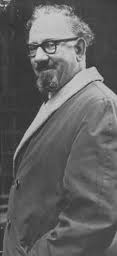
Alfred Walter Stewart, alias J. J. Connington


Three of the seventeen Sir Clinton Driffield detective novels by Golden Age British great J. J. Connington (the pseudonym of the distinguished Scottish chemistry professor Alfred Walter Stewart) have been reprinted by Coachwhip Publications, a quality print-on-demand publisher (for my review of Coachwhip's edition of Max Carrados stories by Ernest Bramah, see here).  The three reprinted titles (each with a ten-page introduction by me on the author and his books) are Murder in the Maze (1927), The Castleford Conundrum (1932) and The Tau Cross Mystery (In England, In Whose Dim Shadow) (1935).

Murder in the Maze (1927), the third Connington mystery novel and Sir Clinton Driffield's debut, was Stewart's breakthrough in the mystery field. It has received praise over the years from many discerning individuals, including T. S. Eliot, Jacques Barzun and John Dickson Carr.  When Eliot reviewed the novel back in 1927 he proclaimed that it instantly put J. J. Connington in the front of the crime writing pack.

Fans of the novel typically have noted, among other the things, the novel's bravura murder setting, a deadly double-centered hedge maze (see left).  Maze is meticulously clued and investigated and has an excellent narrative pace.  It is one of the best 1920s English country house mysteries.
Maze has everything people have come to expect from Golden Age English detective novels: an outwardly peaceful but inwardly fractious country house filled with suspicious denizens; fiendish murders (better yet it's poisoning with our old friend curare); a brilliant detective and his Watson-like sidekick (Sir Clinton Driffield, Chief Constable of the country, and his friend Squire Wendover); discreet love interest; and clues aplenty.

What more could the mystery fiend ask for than the above catalogue?  Yet the novel has its original touches, mostly stemming from the bracing ruthlessness of Clinton Driffield, a unique investigator in the field whom you won't soon forget. Country houses may well be cozy in theory, but this tale is no cozy.

The eighth Clinton Driffield detective novel, The Castleford Conundrum (1932), is another classic country house detective tale.  If you thought "Whistlefield" in Murder in the Maze was a fractious house, wait until you visit Castleford's "Carron Hill," home of the odious yet immensely wealthy Winifred Castleford, her husband and stepdaughter, and sundry designing--and mutually despising--relations.

Alfred Walter Stewart suffered gladly neither fools nor knaves--and there are fools and knaves aplenty in The Castleford Conundrum, giving rise to some of Connington's best writing, in his most scathing vein.  Winifred Castleford certainly is not one of humanity's great prizes, but then neither is most of her family!
When "Winnie" is found shot dead by a rook rifle, the field of suspects is large.  A not necessarily exhaustive list at first blush includes the second husband, the stepdaughter, the two brothers-in-law from the first marriage, the half-sister, the nephew and even a neighbor.

Clinton Driffield arrives--with Wendover in tow--later in the novel, when the investigation is flagging, and his investigation is brilliant, a delight to all lovers of classical English detection.  In The Castleford Condundrum, the author is writing at the height of his powers, both in terms of plotting and pure writing.  E. C. Bentley, author of Trent's Last Case, specifically praised Connington's character-drawing in the novel.


Connington's tenth Sir Clinton Driffield detective novel, The Tau Cross Mystery/In whose Dim Shadow (1935), moves away from the country house milieu so strongly associated with Golden Age English mystery. In truth many 1930s English mysteries do not take place in imposing country houses or Edwardian villages, despite the fact that it is these settings that have so powerfully captured the modern view of classical English mystery.

Much suburban housing expansion occurred in 1930s England, with bungalows and mock Tudor dwellings springing up all over once pristine countryside.  The Tau Cross Mystery takes place in precisely such a development, one convincingly conveyed by the author.
There is even a frontispiece map of the neighborhood where the murder takes place (every true classic mystery fan loves a map and/or houseplan). Yet more than the setting is of interest--Connington's cast of characters is strong as well. The ambitious police constable, the pushy journalist, the callow evangelist, the careworn Frenchwoman, the introverted clerk and others are compellingly portrayed.

Critics again praised both Connington's clueing and his character drawing.  "These are not the detective's stock figures," wrote one, "but fully realised human beings." Similarly, another reviewer, the American writer Will Cuppy, was dazzled by the novel's "abundance of clews and many other aids to armchair sleuthing."


It would be wonderful to see other Clinton Driffield detective novels appear back in print, such as Tragedy at Ravensthorpe (1927), The  Case with Nine Solutions (1928), The Boathouse Riddle (1931), The Sweepstake Murders (1931), The Ha-Ha Case (1934) and A Minor Operation (1937), but future publication depends on how these three editions sell.  If there is sufficient interest we may see more.  Having devoted a heavily researched and lengthy chapter of my forthcoming book with McFarland to Alfred Walter Stewart and his J. J. Connington mysteries, I believe that the man's fictional work deserves at least a modest revival.

Friday, December 9, 2011

Masters of the "Humdrum" Mystery


A couple years after the 1957 death of the great Golden Age detective novelist Freeman Wills Crofts, crime writer and critic Julian Symons in his Sunday Times book review column proclaimed "John Rhode" (one of the two most prominent pseudonyms of the extremely prolific crime writer Cecil John Charles Street) England's reigning "master of the humdrum" mystery.

Freeman Wills Crofts
John Street
For Symons, this title was not meant to be a complimentary one.  Symons used the term as as a way of dismissing English detection authors he saw as tedious and dull writers, focused entirely on the construction of "mere puzzles," rather than deeper explorations of theme and character (as Symons felt he was doing himself in his own crime writing, with such pathbreaking novels as The Thirty-First of February and The Colour of Murder).

Julian Symons
When some dozen years later he came to write his seminal study of crime fiction, Bloody Murder, Julian Symons argued that there was an entire "Humdrum school" of British detective novelists, headed by Crofts and Rhode but also including other writers, such as the husband and wife team of G. D. H. and Margaret Cole.  At other times he included such writers as J. J. Connington (Alfred Walter Stewart), Henry Wade (Henry Lancelot Aubrey-Fletcher), E. R. Punshon, R. A. J. Walling, J. S. Fletcher, Gladys Mitchell and Arthur Upfield on his Humdrums list.

Gladys Mitchell, Humdrum?
Some of these inclusions are to my mind unwarranted (whatever Gladys Mitchell may have been, for example, she wasn't "Humdrum," certainly not during the Golden Age, and Henry Wade is grossly underappreciated as a  literary stylist), but I dislike the entire assumption behind the use of the term "Humdrum": that writing puzzles, "mere puzzles" as they so often are smugly called, is an inferior literary art.  This is the sort of literary snobbery that Agatha Christie, the greatest puzzler of them all, frequently has been subjected to over the years.  I believe that constructing  a good mystery puzzle is a darn hard thing to do!

The greatest "mere puzzler" of them all: Agatha Christie
I wrote my new book, Masters of the "Humdrum" Mystery: Cecil John Charles Street, Freeman Wills Crofts, Alfred Walter Stewart and the British Detective Novel, 1920-1961 (to be published by McFarland Press in June 2012) in part to give a long overdue reappraisal of these "Humdrum" detection writers as accomplished literary artists.  Not only did they produce a goodly number of fine fair play puzzles, but their clever tales have more intrinsic interest as social documents and even sometimes as literary novels than they have been credited with having.

"J. J. Connington": third member of
the great "Humdrum" trimuvirate
Too often today is the Golden Age of British mystery writing defined exclusively by the four British Crime Queens: Agatha Christie, Dorothy L. Sayers, Margery Allingham and Ngaio Marsh.  While these talented and beloved women crime writers are of great importance to the study of the period, they should not be treated as the period's sole representatives.  As my study shows, the Humdrums were distinctive writers in their own right, actually quite distinguishable from their accomplished sisters in  crime.  They were, in fact, their own men.

Dorothy L. Sayers
Margery Allingham
Ngaio Marsh
My hope is that Masters of the "Humdrum" Mystery will entertain and inform readers but also provide us all with a fuller understanding of the history of the mystery genre during its Golden Age and its aftermath.

Link to McFarland's Masters of the "Humdrum" Mystery page:

http://www.mcfarlandpub.com/book-2.php?id=978-0-7864-7024-2